

The Pentagon is threatening further, unspecified measures against Canada unless Ottawa turns its defense spending pledges into forces that help protect North America. A senior Department of War official delivered the warning Tuesday in a background briefing for Canadian reporters, one day after the department posted a fact sheet titled “Canadian Defense Shortfalls.”
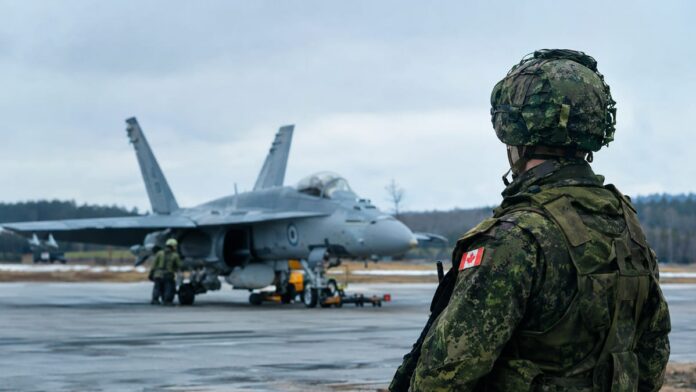
The fact sheet puts the share of the Royal Canadian Air Force fleet that was serviceable in 2025-2026 at just 41.9%, largely because of aging equipment and personnel shortages. Its bottom line for Ottawa: “Canada must get serious and focused.”
What the fact sheet lays out
The Canadian Army had an operational readiness rate of 48% over the same period, and 53.9% of the naval fleet was serviceable. Only one of Canada’s four aging Victoria-class submarines is seaworthy at any given time. Canada has no airborne early warning and control aircraft and relies on the United States and NATO for that capability.
Ottawa has been reviewing its 2023 decision to buy 88 F-35s since March 2025 and is considering a new fleet of fourth-generation jets to replace CF-18s that leave service in the early 2030s. The Pentagon warns a mixed fleet would compound Canada’s personnel shortfalls and that Ottawa’s focus on “parochial economic and commercial interests” adds uncertainty for NORAD and burdens American taxpayers.
Canada spent below 1.5% of GDP on defense every year until 2025. It first agreed to NATO’s 2% target at the 2006 Riga Summit and did not reach it until 2025. At the 2025 Hague Summit it committed to 5% of GDP by 2035, but the department faults Ottawa for deferring the largest increases until after the 2029 federal election.
Why it matters
The Pentagon has taken a graduated approach that began with suspending the Permanent Joint Board on Defense last spring. The official warned that the department is ready to escalate if Canada cannot credibly turn its pledges into investments for North American defense, and said “the gap between rhetoric and reality in Ottawa is the widest in all of NATO,” CBC News reported. The official also pointed to Germany as a model ally and to the F-35 purchase as one step Washington wants to see.
Daily Beltway analysis: The fact sheet and briefing build on Secretary of War Pete Hegseth’s memo limiting U.S. military contacts with Canadian counterparts. NORAD’s air defense of the continent depends on both countries, so U.S. officials are tying Canada’s readiness directly to American homeland security and to what American taxpayers end up covering.
Canada’s response
Canadian Defence Minister David McGuinty pushed back on Tuesday as he arrived for a cabinet meeting. “Canada’s a sovereign nation. I’ll be very direct: We don’t report to the United States,” McGuinty said. He pointed to a federal budget that lays out a path to defense spending of 4% of GDP by 2030.
What’s next
Canada’s budget sets a path to 4% of GDP on defense by 2030, and it is vague on spending after that. NATO plans to review the 5% goal in 2029, with allies committed to reach it by 2035. The Pentagon has not spelled out what further measures it is weighing or when it would act.