

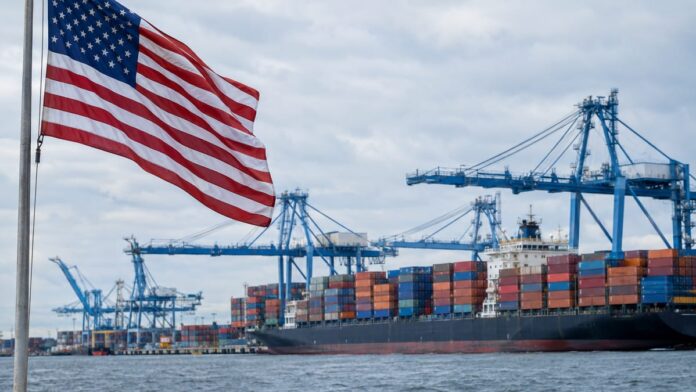
U.S. Trade Representative Jamieson Greer on Wednesday proposed new tariffs on goods from 14 trading partners, including China, the European Union, Japan and India, after finding that their industrial policies fuel “structural excess capacity” in manufacturing. Greer determined under Section 301 of the Trade Act of 1974 that those practices are unreasonable and burden or restrict U.S. commerce.
The proposed rates run as high as 35% on all goods from Vietnam and 25% on goods from India. None takes effect yet: USTR opened a public comment period that runs into January, and hearings are set for Jan. 25, 2027.
For decades, foreign governments have created, sustained, or contributed to structural excess capacity and production by pursuing industrial strategies built on wage suppression, illegal subsidies, non-market inputs, and other market-distorting practices.
Today, after lengthy… pic.twitter.com/UbaaF8tuhS
— United States Trade Representative (@USTradeRep) November 25, 2026
What the proposal does
The determinations cover China, the EU, Singapore, Switzerland, Indonesia, Malaysia, Cambodia, Thailand, South Korea, Vietnam, Taiwan, Bangladesh, Japan and India. USTR made no determination on Mexico or Norway, the other two economies in the investigation.
For China, USTR proposes tariffs of up to 20% on most goods and up to 10% on goods listed in an annex, with exemptions for products on the U.S.-China Board of Trade “30-For-30” list of items recommended for reduced tariffs. The EU faces a 15% rate, and Japan, South Korea, Switzerland and Taiwan face up to 15%. Bangladesh, Cambodia, Indonesia, Malaysia and Thailand face up to 18%, and Singapore up to 20%.
Several proposals build in a lower rate for a trade deal. India’s rate could drop to 17% and Vietnam’s to 20% if either reaches an Agreement on Reciprocal Trade that answers the findings, and Singapore’s could fall to 10%.
“President Trump is proposing to take action to bring about the elimination of these unfair acts, policies, and practices. In doing so, we can level the playing field for American workers and chart a new, more sustainable course for the world economy,” Greer said.
Why it matters
USTR opened the 16 investigations on March 11, 2026, and received testimony from nearly 140 witnesses and 1,070 public comments. The probes give the administration a new legal path for tariffs after the Supreme Court struck down the “reciprocal” duties Trump imposed in 2025.
Daily Beltway analysis: Most of the proposed rates track ceilings already written into the administration’s trade frameworks, such as the 15% cap in the U.S.-EU deal, so the biggest new exposure falls on economies without a finished agreement, led by Vietnam and India. The deal discounts give those governments a clear reason to keep negotiating.
The other side
Trading partners pushed back within hours. “We will study the findings. At the same time we strongly reject the premise that Europe is a source of structural overcapacity. To the contrary, Europe is among those most exposed to overcapacity,” European Commission deputy chief spokesperson Olof Gill said. Bernd Lange, who chairs the European Parliament’s trade committee, called the allegations absurd and said the EU “must act swiftly” if Washington breaches its commitments.
Washington’s allegations about EU industrial overcapacity are absurd. We’ll now see whether the announced US tariffs comply with Turnberry in practice. If Washington breaches its commitments, the EU must act swiftly. It has the legal means to do so.
— Bernd Lange (@berndlange) November 25, 2026
China’s Foreign Ministry spokesman Guo Jiakun said, “The so-called ‘overcapacity’ is a false issue, and China opposes using it as an excuse for political manipulation.” India’s Commerce Ministry said the notice is under examination and that India “does not have structural excess capacity in any sector.”
What’s next
Requests to appear at the hearings, with a summary of testimony, and written comments are due Jan. 5, 2027. USTR will begin hearings on the proposed actions on Jan. 25, 2027. A senior U.S. official told POLITICO the duties would likely take effect in January at the earliest, and that for the EU, which already faces a 10% forced-labor tariff, the higher of the two rates would apply rather than both.
Sources
- ustr.gov
- politico.eu
- aljazeera.com
- business-standard.com
- Original post: United States Trade Representative (@USTradeRep) on X, Nov 25, 2026
- Related posts reviewed for this report:
If an embedded post does not load, these links open the originals.