


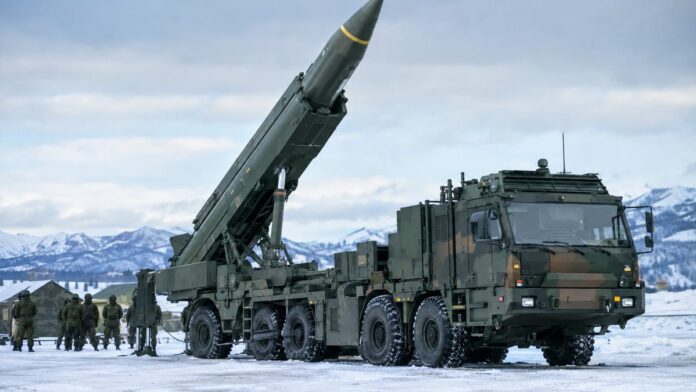
Japan will base its new Type 25 hypersonic glide missile on Hokkaido, the Japanese island closest to Russia. The Defense Ministry’s Hokkaido Defense Bureau announced on Nov. 25 that a Ground Self-Defense Force unit armed with the weapon is expected to deploy to Camp Kamifurano in December.
The bureau said it will announce a specific date once preparations are complete. NHK reported that launchers and other equipment could move into the camp as early as the start of December, with deployment beginning right after. It will be the first time one of Japan’s new long-range missiles is stationed on Hokkaido.
What the deployment does
The Type 25 Hyper Velocity Gliding Projectile is a domestically developed stand-off missile with a range of several hundred kilometers. It is built to strike enemy forces that land on Japan’s remote islands, and Japan plans to extend its range in the future.
Kamifurano becomes the second Type 25 site after Camp Fuji in Shizuoka prefecture, where the Ground Self-Defense Force first deployed the weapon in March. A third site, Camp Ebino in Miyazaki prefecture, is set to receive it before the fiscal year ends in March 2027. Spreading the launchers across several camps is meant to ensure missiles can still be fired from another site if one comes under attack.
Why it matters
The missiles count toward Japan’s counterstrike capability, the ability to hit enemy bases, which Tokyo committed to acquiring in its national security strategy updated in 2022.
Daily Beltway analysis: Japan, a U.S. treaty ally, is building long-range strike power of its own rather than leaning only on American forces. Putting the weapon on Hokkaido extends that buildup to Japan’s northern flank, which faces Russia across the Sea of Okhotsk near the disputed southern Kuril Islands. Tokyo frames the weapon’s job as island defense anywhere in Japan, not as aimed at one country.
Moscow’s position
Russia has already objected to the system. In October, after Type 25 launchers were placed in Japan during the U.S.-Japan Keen Sword exercises, Russian Foreign Ministry spokeswoman Maria Zakharova said Moscow would be forced to take compensating measures to strengthen its defenses and warned of added risks to Russia’s Far East borders, according to RIA Novosti.
Moscow has not yet commented on the Hokkaido deployment specifically. Tokyo calls the missile a deterrent meant to make any adversary weighing an amphibious assault on Japanese territory expect resistance well before reaching shore.
What’s next
The Hokkaido Defense Bureau will announce the exact deployment date once preparations are complete; equipment could arrive at Camp Kamifurano in early December. Camp Ebino is scheduled to receive the Type 25 before March 2027.