


Chicago Budget Deficit Sparks Voter Revolt as Mayor Brandon Johnson Faces Intense Public Backlash
Chicago Mayor Brandon Johnson faced intense public confrontation during a chicago mayor town hall meeting as residents demanded accountability over the city’s mounting chicago budget deficit, spending on migrants, and what they described as repeated leadership failures. The confrontations came as city leaders moved forward with an independent financial investigation following the third resignation of a chief financial officer under Johnson this year.
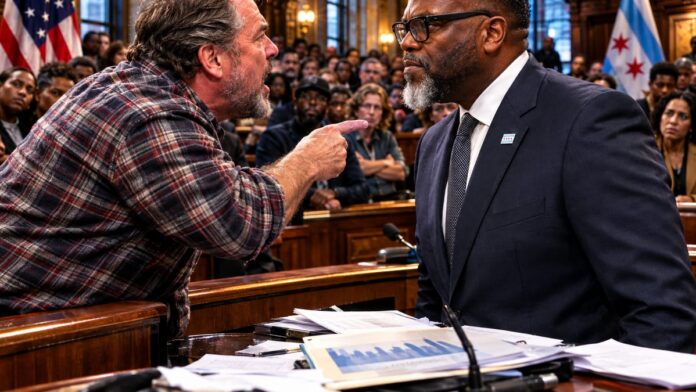
One resident delivered a blistering assessment directly to the mayor during the public session. The resident told Johnson he had failed the city and needed to take accountability as both a leader and a human being. The speaker accused Johnson of putting Chicago in the ground through his decisions on the migrant crisis and said there should be no question about requiring full disclosure of city expenses. The resident emphasized that the money belongs to taxpayers, not the mayor.
BLUE CITY BACKLASH: Chicago mayor Brandon Johnson now getting an earful from his own constituents — amid growing questions about his proposed budget, migrant spending, and his ability to lead. pic.twitter.com/vRghjpfWHg
— America's Newsroom (@AmericaNewsroom) November 19, 2026
The exchange highlighted the growing discontent among Chicago voters with Johnson’s handling of the chicago budget crisis and his approach to migrant spending. City leaders have expressed alarm over the lack of transparency surrounding how taxpayer dollars are being allocated, particularly as the city faces significant financial pressure heading into the 2026 budget cycle.
The city’s chief financial officer resigned abruptly on Friday over concerns that Johnson was presenting an overly optimistic view of the city’s budget and financial condition. The resignation marked the third departure from that position under Johnson in less than a year. The repeated turnover in the CFO role has raised questions about the administration’s internal financial management and whether Johnson is receiving or accepting accurate assessments of the city’s fiscal health.
Following the resignation, the Chicago City Council voted overwhelmingly to bring in an outside investigation of the city’s finances. The vote reflected bipartisan concern over the administration’s budgetary practices and transparency. Council members have pressed for a full accounting of how city funds are being spent, particularly in connection with the ongoing migrant crisis that has strained city resources.
Johnson has pushed back against claims of financial mismanagement or wrongdoing. He stated that there is nothing secretive about the city’s budgetary process and that he welcomes additional transparency. Johnson said he supports any audit or investigation and that his administration has nothing to hide. He has argued that he is carrying out the agenda that voters elected him to implement.
The mayor’s defense has done little to quiet the criticism. Residents at the public session pressed Johnson on a range of issues including the chicago budget shortfall, the allocation of funds for migrant services, and the city’s ongoing struggles with crime. Many expressed frustration that the administration has not been forthcoming about the full scope of the city’s financial challenges.
The chicago mayor race is scheduled for three months from now, placing Johnson under significant political pressure as these controversies continue to draw attention from voters. Johnson launched his reelection campaign earlier this year, promising to transform Chicago into America’s safest and most affordable major city. That pledge now stands in sharp contrast to the financial and leadership questions that have dominated his first term.
Chicago has faced mounting fiscal challenges during Johnson’s tenure. The city has grappled with a chicago budget deficit driven in part by increased spending on services for migrants. Johnson previously acknowledged that city contracts tied to the migrant influx were directed toward Black-owned businesses, a practice that drew scrutiny and questions about whether race played an improper role in the allocation of taxpayer funds. The Department of Justice has since reviewed the contracting process to determine whether federal rules against racial favoritism were violated.
The city’s financial troubles come amid broader challenges including declining public school enrollment, an exodus of businesses, and persistent crime concerns. Chicago Public Schools enrollment has collapsed to crisis levels, with 13 high schools now sitting at least 80 percent empty. The district has lost more than 77,000 students since 2010, raising questions about the sustainability of current education funding models.
Johnson has faced criticism from both progressives and moderates within his own party over his handling of the city’s budget and priorities. Some have argued that his spending commitments are unsustainable given the city’s revenue picture, while others have pressed him to do more to address crime and economic development. The repeated resignations of top financial officials have only intensified those concerns.
The confrontation at the town hall underscored the depth of frustration among Chicago residents who feel the administration has not been transparent about the city’s financial condition. The resident who confronted Johnson framed the issue in stark terms, saying it was common sense that taxpayers have a right to know how their money is being spent and that the mayor should not need to be told that basic principle.
City council members have echoed those concerns. The overwhelming vote to authorize an independent financial review reflected a loss of confidence in the administration’s financial reporting. Council members have said they need an objective assessment of the city’s fiscal health in order to make informed decisions about the budget and future spending priorities.
Johnson’s response to the criticism has been to frame the scrutiny as a normal part of the democratic process. He has said he welcomes accountability and transparency and that his administration has nothing to fear from an independent review. At the same time, he has defended his record and argued that he is delivering on the progressive agenda that Chicago voters supported in the last election.
The mayoral election three months from now will serve as a referendum on that claim. Johnson faces multiple challenges from candidates who have criticized his leadership and promised a different approach to managing the city’s finances and addressing its crime and education crises. The outcome of the race will determine whether Chicago voters believe Johnson has earned a second term or whether they are ready for a change in leadership.
For now, the focus remains on the city’s budget process and the upcoming independent financial review. Residents and city leaders alike are demanding answers about the true state of Chicago’s finances and whether the administration has been forthright about the challenges ahead. The confrontation at the town hall made clear that patience is running thin and that voters expect accountability from their elected leaders.
Sources
- Original post: America’s Newsroom (@AmericaNewsroom) on X, Nov 19, 2026
- Related posts reviewed for this report:
- Eric Daugherty (@EricLDaugh) on X, Nov 19, 2026
- Ryan Fournier (@RyanAFournier) on X, Nov 19, 2026
- RedWave Press (@RedWavePress) on X, Nov 17, 2026
Posts on X are shown as published by their authors; claims in them are attributed, not independently confirmed unless the article says so. If an embedded post does not load, these links open the originals.