


Trains Lose Power Under Hudson River — Loose Wires Strand Commuters in Tunnel
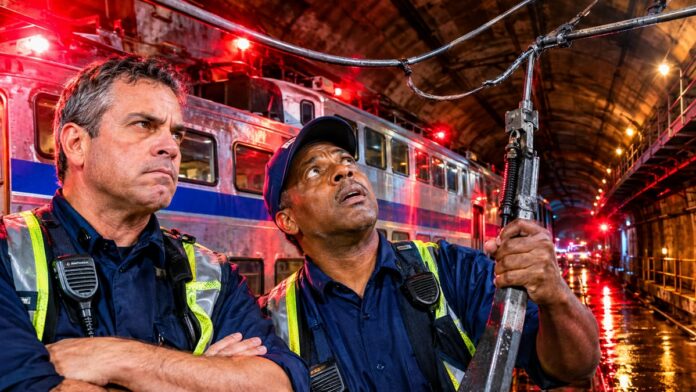
Two NJ Transit trains lost power and stalled inside a Hudson River tunnel during Monday evening’s rush hour, leaving riders stranded underground and triggering widespread delays across multiple lines. The incident began around 7:15 p.m. when both trains became disabled in one of the system’s most critical corridors. Officials traced the problem to loose overhead wires flagged by the alert system.
The power loss created a ripple effect that shut down normal operations heading into and out of New York’s Penn Station. Commuters reported crowded platforms, extended waits, and rerouted trains as crews worked to restore service. While the immediate problem was resolved later in the evening, residual delays continued to impact schedules into the night.
🚨 Major disruptions struck NJ Transit tonight after two trains lost power and became disabled under the Hudson River
“The alert system indicated loose overhead wires were partly to blame.” pic.twitter.com/gcwUiF2CDM
— Chief Nerd (@TheChiefNerd) November 17, 2026
Loose overhead wires represent a basic maintenance shortfall. These are not exotic failures requiring cutting-edge diagnostics. They are the kind of infrastructure problem that routine inspection and upkeep should prevent. Yet the system that carries thousands of workers every day failed at a fundamental level during one of the busiest travel windows of the week.
Riders who depend on NJ Transit for daily commutes absorbed the cost in lost time, missed connections, and the frustration of being stuck underground with no clear timeline for resolution. The episode adds to a growing list of reliability issues that have plagued the system for years.
Aging rail infrastructure demands consistent attention rather than reactive fixes after problems surface. The Hudson River tunnels are a vital artery for regional transportation. When basic components like overhead wires fail, the entire system grinds to a halt. That reality should drive a maintenance standard that prevents breakdowns instead of scrambling to fix them in real time.
Service has returned to normal, but the question remains whether the underlying maintenance gaps that allowed loose wires to disable two trains will be addressed. The pattern of infrastructure failures across the region — from airline system outages to rail breakdowns — suggests a broader challenge in maintaining the systems Americans rely on every day.
Commuters heading into Tuesday’s morning rush will be watching to see if the repairs hold and whether the system that failed them Monday night can deliver reliable service going forward. For a transit network that serves one of the busiest corridors in the country, the bar for infrastructure integrity must be higher than what Monday’s breakdown revealed.
Sources
- Original post: Chief Nerd (@TheChiefNerd) on X, Nov 16, 2026
- Related posts reviewed for this report:
- Ryan (@rynscbiz) on X, Nov 17, 2026
- Mario Nawfal (@MarioNawfal) on X, Nov 17, 2026
- Sheryl | Simple Advice (@chinilovers2) on X, Nov 17, 2026
Posts on X are shown as published by their authors; claims in them are attributed, not independently confirmed unless the article says so. If an embedded post does not load, these links open the originals.