

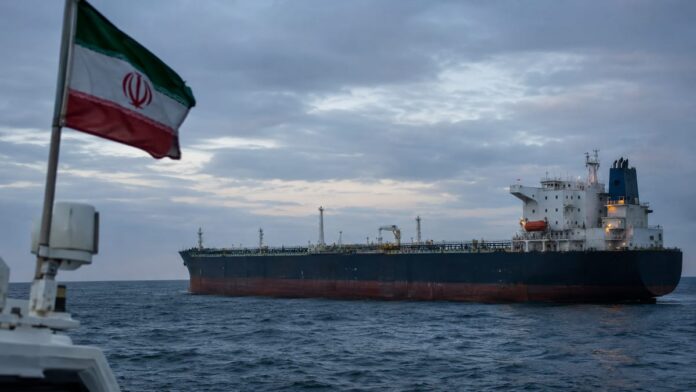
The Treasury Department on Wednesday sanctioned an India-based couple and a web of companies that it says sold fake flags and phony certifications to tankers moving Iranian oil, part of what the department calls Operation Economic Outcast, according to a Treasury press release.
Treasury identified the pair as Suniel Kumar Sharma and his spouse, Jaspreet Preeti Shahid, and said in its release that their “schemes have provided false flags and certifications to sanctioned vessels involved in transporting Iranian petroleum, including vessels operating on behalf of the Iranian military and its proxies.”
As we have said many times, under Operation Economic Outcast, you are either with us or against us. We know where you are, and we will sanction those who continue supporting the Iranian regime, whether by land, sea, or air. https://t.co/VySnI0QvpN
— Treasury Secretary Scott Bessent (@SecScottBessent) November 4, 2026
Treasury Secretary Scott Bessent framed the action as a warning to anyone still doing business with Tehran. “As we have said many times, under Operation Economic Outcast, you are either with us or against us,” Bessent said in a post on X. “We know where you are, and we will sanction those who continue supporting the Iranian regime, whether by land, sea, or air.”
Fake registries for a shadow fleet
According to The Hindu BusinessLine, which carried an ANI report on the action, Treasury said the couple set up fraudulent maritime registries and classification societies by building websites that claimed to offer services on behalf of countries that had never authorized them. The department said the activity dated back to at least 2014, when the network allegedly tried to impersonate the ship-flagging authority of the Caribbean nation of Dominica, the outlet reported.
The Office of Foreign Assets Control’s list of Wednesday’s designations names a string of companies linked to the couple, most of them based in Chandigarh, India, including Oceaniek Technologies India, Aryavart Ship Management Private Limited, Polynesia Maritime Private Limited and Precept Trends Private Limited. OFAC also listed a Singapore-registered company using the name Eswatini Maritime Affairs and International Ship Registry. India Today reported that the action covered the businessman, his wife and nine India-linked entities.
Fake flags matter because they let tankers hide who they really are. Treasury also issued an alert warning the shipping industry about falsely flagged vessels, saying such registrations let ships involved in illicit trade dodge international rules on crew safety and environmental protection, according to The Hindu BusinessLine.
Turkish airport firm hit too
In the same action, Treasury sanctioned Fugo Ground Services Inc, a ground-handling company based in Istanbul. According to the Treasury release, the firm has direct service agreements with U.S.-sanctioned Iranian carriers including Iran Air Tour, Saha Airlines, Sepehran Airlines, Varesh Airlines, Taban Airlines and Ata Airlines Company, and began servicing several of them in the weeks after those airlines were designated on September 8, 2026.
“Treasury has repeatedly warned that it will take action against those who continue to support Iran’s aviation industry, a key enabler of the regime’s destabilizing proliferation and terrorist activity,” the department said in its release.
All of the targets were designated under Executive Order 13902, which covers the petroleum, petrochemical and aviation sectors of Iran’s economy, according to the Treasury release. Al-Monitor reported that the action also named two other Indian citizens who head companies tied to the couple.
Pressure campaign keeps rolling
The designations come one day after midterm elections in which Democrats won control of both chambers of Congress, with Democratic leaders promising to wind down the war with Iran. Wednesday’s action signals that the administration’s economic squeeze on Tehran is continuing in the meantime, with Bessent saying in his post that sanctions will keep coming for anyone who helps the regime.
Under U.S. sanctions rules, any property the designated people and companies hold in the United States is blocked, and Americans are generally barred from dealing with them, according to Treasury.
Sources cited
- https://home.treasury.gov/news/press-releases/sb0681
- https://ofac.treasury.gov/recent-actions/20261104
- https://www.thehindubusinessline.com/news/us-sanctions-india-based-couple-companies-accused-of-helping-irans-shadow-fleet/article71668305.ece
- https://www.indiatoday.in/amp/world/story/us-sanctions-indian-businessman-wife-and-nine-india-linked-entities-over-iran-oil-exports-3032570-2026-11-05
- https://www.al-monitor.com/originals/2026/11/us-slaps-sanctions-indian-turkish-firms-and-people-aiding-iran
- https://x.com/USTreasury/status/2118051503982383268
Sources
- Original post: Treasury Secretary Scott Bessent (@SecScottBessent) on X, Nov 4, 2026
Posts on X are shown as published by their authors; claims in them are attributed, not independently confirmed unless the article says so. If an embedded post does not load, these links open the originals.