


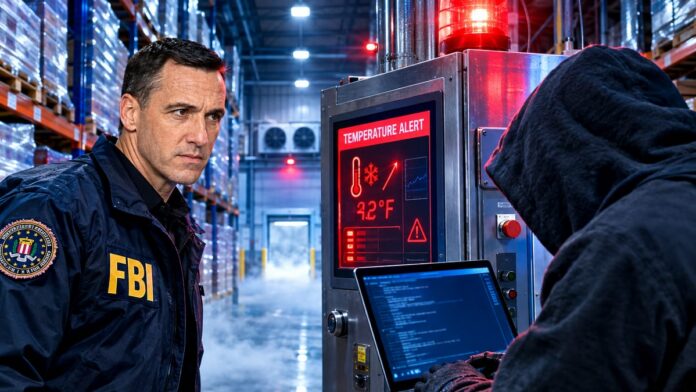
FBI Warns of Coordinated Cyberattacks Targeting Food and Blood Supply Cold Storage Systems
The FBI and federal cybersecurity partners issued an urgent advisory this week after hackers successfully breached industrial refrigeration systems protecting blood, food, and medicine at facilities worldwide, including a coordinated attack on three blood bank sites in France where attackers attempted to switch plasma freezers into heating mode.
Brett Leatherman, head of FBI Cyber, disclosed the campaign in a public warning video released alongside a joint advisory from the FBI and the Cybersecurity and Infrastructure Security Agency. The attacks represent a direct threat to critical infrastructure across healthcare, food production, and agriculture sectors in the United States, federal officials said.
🇺🇸 OMG! FBI warns hackers are TARGETING refrigeration systems that keep food and blood cold
Attackers reportedly hit temperature controllers at grocery stores and cold storage facilities worldwide over the past few weeks, including 3 foreign blood service facilities.
In one…
— Mario Nawfal (@MarioNawfal) November 6, 2026
The most alarming incident occurred earlier this month in France, where attackers targeted refrigeration systems at three National Blood Service facilities. In at least one case, hackers successfully accessed temperature controllers and attempted to manipulate plasma freezers into heating mode — a sabotage that would have destroyed blood supplies had facility alarms and staff not responded in time. No blood was lost in the French incidents, but the intent was clear: attackers sought to destroy medical supplies rather than steal data or demand ransom.
The scope of the attacks extends far beyond France. According to the FBI assessment, hackers have successfully compromised temperature control systems at grocery stores and cold storage facilities worldwide over the past several weeks. These systems are essential infrastructure protecting perishable food, pharmaceuticals, and medical supplies across the American supply chain.
Federal investigators identified a common attack pattern. Hackers are exploiting basic cybersecurity failures rather than sophisticated zero-day vulnerabilities. According to Leatherman, attackers are gaining access through controllers that remain unpatched, are directly reachable from the public internet, or continue to operate with default passwords listed in manufacturer manuals. The simplicity of the attack method suggests widespread vulnerability across the cold storage sector.
The targeting of refrigeration systems represents an escalation in cyber threats to critical infrastructure. Previous campaigns typically involved data theft or system disruption for financial gain. This coordinated effort appears designed to actively sabotage and destroy perishable goods and medical supplies, suggesting attackers may be motivated by objectives beyond ransom demands.
The FBI and CISA joint advisory released this week provides specific defensive measures facility operators must implement immediately. Federal officials are urging operators to remove industrial refrigeration controllers from public internet access entirely. For facilities requiring remote access, the advisory mandates placing all connections behind firewalls. Operators must change all default passwords to unique strong credentials, gain full understanding of how vendors have configured these devices, establish safe temperature limit parameters in the systems, and ensure temperature alerts reach appropriate personnel promptly.
The French blood bank incident demonstrates both the danger and the potential for effective defense. Facility alarms functioned as intended, staff responded appropriately, and no supplies were lost. Had those systems lacked proper alerting mechanisms or had personnel failed to act, significant quantities of blood products would have been destroyed — potentially affecting patient care and emergency medical operations across the region.
For American businesses and healthcare facilities, the timing of the advisory signals federal concern about imminent threat. The FBI does not typically issue public warnings with specific technical guidance unless agencies assess the threat as both active and widespread. The disclosure suggests federal investigators believe many American facilities remain vulnerable to the same attack methods that successfully compromised French blood service sites.
The vulnerability of cold chain systems to cyberattack has long been recognized by security experts, but this coordinated global campaign represents a new phase of threat. Food, blood, and medicine are now confirmed targets in what national security officials view as deliberate attacks on supply chain infrastructure.
Facility operators who delay implementing basic security measures are leaving systems exposed to the attack pattern federal agencies have now documented across multiple countries. The guidance is straightforward, and the stakes are clear: refrigeration controllers protecting America’s food and medical supplies require immediate hardening against a threat that has already proven both willing and able to sabotage critical systems.
Sources
- Original post: Mario Nawfal (@MarioNawfal) on X
- Related posts reviewed for this report:
- Open Minded Approach (@OMApproach) on X, Nov 2, 2026
- Dr John Vervaeke (@DrJohnVervaeke) on X, Nov 6, 2026
- Sparient (@Sparientinc) on X, Nov 5, 2026
Posts on X are shown as published by their authors; claims in them are attributed, not independently confirmed unless the article says so. If an embedded post does not load, these links open the originals.