


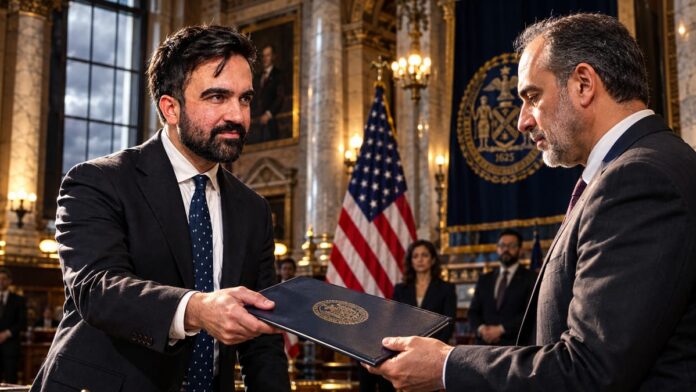
Ramzi Kassem Appointed NYC Chief Counsel Despite Record Representing t*rrorists Detainees
New York City Mayor Zohran Mamdani appointed Ramzi Kassem as chief counsel to his administration, a decision drawing immediate scrutiny due to Kassem’s history representing Guantanamo Bay detainees with documented ties to t*rrorists operations connected to the September 11 attacks.
Mamdani announced the appointment directly, emphasizing Kassem’s credentials as a CUNY law professor and his tenure as a senior policy advisor in the Biden administration from 2022 to 2024. Mamdani also pointed to Kassem’s experience arguing cases before the Supreme Court as evidence of his qualifications for the chief counsel role.
🚨BREAKING: Zohran Mamdani stuns New York, putting Ramzi Kassem — 9/11 Al Qaeda defense lawyer — in charge as Chief Counsel
New York, what have you done? pic.twitter.com/nQ5tbcXgvR
— Leak Wire (@LeakWireQ) November 23, 2026
In his statement, Mamdani said he would turn to Kassem for his remarkable experience and commitment to defending those too often abandoned by the legal system. Mamdani expressed hope that marginalized New Yorkers, including homeless veterans and immigrants, would now feel they have leaders in their corner who understand their struggles. He described the appointment as essential to building the prosperous city he intends to deliver.
Kassem’s Legal Record Raises National Security Questions
Kassem’s professional background includes years of legal representation for detainees held at Guantanamo Bay, individuals with documented connections to t*rrorists and operations linked to the deadliest assault on American soil. That record now places him in a senior legal advisory position within the largest city government in the United States, at a time when the Trump administration has made counterterrorism accountability a cornerstone of federal policy.
The appointment comes as New York City faces ongoing public safety challenges, rising concerns over immigration enforcement, and strained relations between city leadership and federal agencies focused on national security. Mamdani’s choice signals a continued emphasis on advocacy for individuals positioned at the edges of the legal system, a category that by Kassem’s own career includes those accused of participation in hostile operations against the republic.
Kassem served in the Biden administration as a senior policy advisor during a period marked by significant shifts in immigration policy, criminal justice reform debates, and tensions over federal enforcement priorities. His academic position at CUNY provided a platform for legal scholarship often focused on civil liberties and representation of defendants in high-profile national security cases.
Mamdani’s Vision and the Political Fallout
Mamdani framed the appointment as part of a broader vision to remake New York City government into an institution responsive to the needs of the homeless, the sick, and the immigrant. He stated that City Hall would be stronger with Kassem in it and described his administration’s mission as delivering prosperity and leadership that has been lacking.
The decision fits Mamdani’s pattern of governance since taking office. He has moved aggressively to close Rikers Island, reduce overall jail capacity, and redirect city resources toward mental health treatment and faster court processing. He has also launched public fundraising campaigns for the Democratic Socialists of America, an organization whose platform includes abolishing the United States Senate and the Electoral College.
Critics of the Kassem appointment argue that placing a lawyer with a history of defending enemies of the republic in a senior city government role sends a troubling message about priorities at a time when American cities remain potential targets for hostile actors. Supporters counter that Kassem’s legal work was professional representation guaranteed by the Constitution, and that his experience navigating complex national security litigation makes him uniquely qualified for the chief counsel position.
The contrast between Mamdani’s vision for New York City and the federal government’s focus on accountability, enforcement, and national security could not be more stark. Kassem’s appointment guarantees that every major legal decision in New York City will now carry the imprint of a lawyer whose career has been defined by advocacy for individuals accused of planning or supporting operations against American civilians and military personnel.
What Happens Next
Kassem’s role as chief counsel will give him authority over legal strategy for the entire city government, including litigation involving federal agencies, enforcement actions, immigration policy, and criminal justice matters. His positions on those issues will shape the city’s posture toward Washington and determine how aggressively New York challenges federal priorities under the Trump administration.
Mamdani’s decision to elevate Kassem reflects a governing philosophy that prioritizes legal representation for the marginalized over alignment with federal counterterrorism policy. That choice will define New York City’s legal posture for years to come and ensure that the debate over who deserves a place in American civic life remains front and center in the nation’s largest city.
The appointment is final. Kassem now holds one of the most powerful legal positions in municipal government, and New Yorkers will live with the consequences of that decision every time their city government takes a legal position on matters of public safety, immigration, and national security.
Sources
- Original post: Leak Wire (@LeakWireQ) on X, Nov 22, 2026
- Related posts reviewed for this report:
- Wall Street Mav (@WallStreetMav) on X, Dec 30, 2025
- Jack (@jackunheard) on X, Dec 31, 2025
- AMERICAN WATCHLADY 🇺🇸🇺🇸 (@watchLamerica) on X, Nov 23, 2026
Posts on X are shown as published by their authors; claims in them are attributed, not independently confirmed unless the article says so. If an embedded post does not load, these links open the originals.