

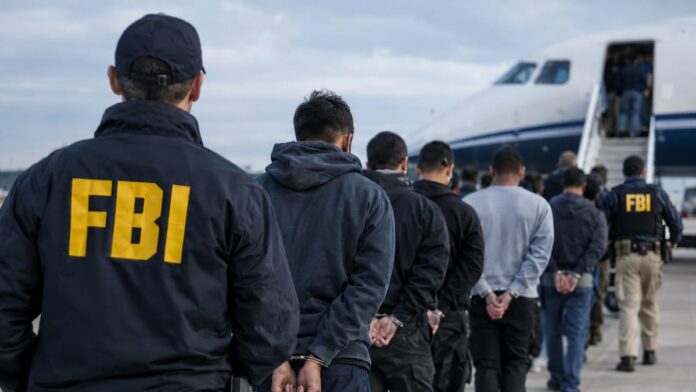
Justice Department prosecutors have taken action in more than 400 cases against more than 800 defendants since President Trump signed Executive Order 14390 on March 6, in what the department billed Tuesday as its largest-ever crackdown on scammers.
Those actions include new charges, extraditions, guilty verdicts and criminal sentences across 85 federal districts, and 30 defendants were extradited to face scam charges in U.S. courts. U.S. prosecutors and agents also helped law enforcement in more than 10 countries raid foreign scam call centers and compounds that targeted Americans.
29 scam compounds across four continents no longer exist.
Under the leadership of @POTUS and @AGToddBlanche, alongside @TheJusticeDept and our interagency and international partners, this FBI is dismantling criminal syndicates around the world that prey on the American people.… pic.twitter.com/PfxtrDFVf9
— FBI Director Kash Patel (@FBIDirectorKash) November 24, 2026
What the surge covers
The Criminal Division coordinated the effort with prosecutors from its white-collar, computer crime, money laundering, child exploitation and international affairs offices. In the month before Tuesday’s announcement alone, the division filed and unsealed charges against more than 30 scam defendants.
Those cases include Southeast Asian scam centers running cryptocurrency investment fraud, a list broker in Mexico accused of selling the names of elderly Americans to scammers, a Peruvian call center that allegedly told Spanish-speaking Americans they would be arrested or deported unless they paid for English-learning products, and a Nigerian national extradited from the United Kingdom for allegedly targeting U.S. service members’ military pay.
In Georgia, 14 people were charged in three indictments with running jury-duty imposter schemes in which current and former prison gang members used contraband cellphones to tell victims they would be arrested unless they paid a “fine.” Another 17 defendants were charged in state court over a scheme to smuggle phones into Georgia prisons.
Through Operation Blackout, the FBI has restrained nearly $17 billion in illicit funds, seized more than 14,000 digital devices and helped dismantle over 29 scam compounds across Asia, Africa and the Middle East. The bureau also helped free and repatriate more than 2,200 trafficked workers who were forced to run scams inside those compounds.
Why it matters
Gallup estimates Americans lost $68 billion to scams in 2025, and 10% of U.S. adults said they or someone in their household experienced a scam last year.
Daily Beltway analysis: The surge leans heavily on targets overseas, from scam compounds to extraditions, which fits the administration’s push to treat scam rings as organized foreign threats rather than one-off fraudsters. “We will continue prosecuting those who perpetrate these schemes and disrupting the activities of transnational criminal organizations before they reach American shores,” Attorney General Todd Blanche said.
The fine print
The 800-defendant total mixes new charges with extraditions, verdicts and sentences, and the department’s release does not say how many of the cases were opened after March 6. The money figures also measure different things. The FBI’s $17 billion is funds restrained, not money returned, and the release does not say how much has reached victims. Fox News reported that officials cited more than $8 billion in intended victim losses recovered. Federal Trade Commission Chairman Andrew Ferguson gave a separate figure for his agency: “the Trump FTC has returned almost $3 billion to American consumers who have been harmed by fraud and deception.”
What’s next
The Justice Department and partner agencies, including the Consumer Financial Protection Bureau, launched a public-education campaign Tuesday urging Americans to use the holiday season, starting with Thanksgiving on Nov. 26, to “Share Your Scam Story” with friends and relatives. The department has posted case details on an interactive map.
Sources
- justice.gov
- justice.gov
- consumerfinance.gov
- foxnews.com
- Original post: FBI Director Kash Patel (@FBIDirectorKash) on X, Nov 24, 2026
If an embedded post does not load, these links open the originals.