


CNN Booking Backfires as Guest Exposes T*rrorist Ideology Live on Air
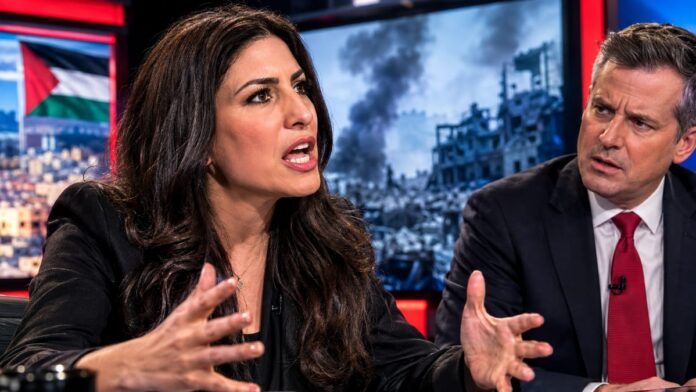
A guest invited onto CNN to discuss the Palestinian cause instead delivered an unfiltered account of the ideology fueling violence in the region, catching the network off guard during a live broadcast. The appearance has drawn widespread attention online, with observers predicting the network will not extend another invitation after the guest departed from the anticipated narrative.
The speaker described her own time spent in West Bank cities including Jenin, Ramallah, Tulkarm and Nablus while advocating for Palestinian children. She noted that she was the only person at the table with that firsthand experience and recounted interviewing members of t*rrorist groups directly, including sitting with the Al-Aqsa Martyrs Brigades.
CNN will never have her on again pic.twitter.com/ytGiVqxFgT
— Oren Barsky (@orenbarsky) September 23, 2026
Those groups told her to her face that they want war, she stated on camera. She emphasized that the conflict is not limited to one organization but stems from a broader ideology taught in schools and textbooks that promotes reverence for death over life.
The remarks described the result as a t*rrorist state facing a republic on an asymmetric battlefield where the challenges of fighting an enemy embedded among civilians are compounded by claims of starvation even when food supplies are not actually short.
The exchange underscores how media outlets that book participants expecting alignment with one side of the conflict can encounter unfiltered accounts of militant groups’ stated goals and the educational systems that sustain them. The clip has circulated widely on social media, with commentary suggesting the network made a miscalculation in vetting.
CNN has built a reputation for curating panels that rarely challenge prevailing narratives on Middle East conflicts. Booking a guest with direct field experience interviewing violent groups appears to have produced a segment the network did not anticipate. The speaker’s account contradicted common media framing that downplays ideological motivations and focuses instead on territorial disputes or humanitarian conditions.
Her testimony centered on what she observed firsthand during her years working in Palestinian territories. She emphasized that her interviews with members of multiple armed factions revealed a consistent desire for continued conflict, not negotiation. The educational materials she referenced promote a worldview that glorifies death in service of the cause, a factor she argued is routinely ignored in mainstream coverage.
The asymmetric nature of the battlefield she described refers to the tactical challenge of combating forces that embed themselves among civilian populations while simultaneously leveraging claims of humanitarian crisis. Her reference to food shortages was a direct rebuttal to narratives suggesting widespread starvation, asserting that supplies exist but are manipulated for propaganda purposes.
Online reaction has been swift. The tweet sharing the clip has accumulated thousands of engagements, with users across the political spectrum noting the rarity of such candid testimony on a major cable network. Conservative commentators have seized on the moment as evidence of media bias, pointing out that networks routinely avoid booking guests who will contradict preferred storylines.
The phrase “CNN will never have her on again” has trended alongside the clip, reflecting widespread belief that the network will not risk a repeat of the segment.
The appearance serves as a case study in what happens when editorial assumptions about a guest’s likely talking points prove incorrect.
For viewers seeking factual reporting on Middle East conflicts, the segment offered a rare glimpse into the stated motivations of groups that Western media often sanitize or contextualize in ways that obscure their openly declared objectives. The guest’s willingness to name those objectives on a platform that typically avoids such clarity made the appearance notable.
The incident also highlights the gap between what sources on the ground report and what makes it onto American television. Reporters and advocates who spend time in conflict zones often return with accounts that do not align with narratives shaped in New York studios. When those accounts reach air, the results can be jarring for audiences conditioned to a different framing.
CNN has not issued a statement regarding the segment or the guest’s remarks. The network’s silence has been interpreted by some as confirmation that the appearance did not go as planned. Whether the network will adjust its booking practices remains to be seen, but the viral spread of the clip ensures the moment will be remembered as a rare break in the usual script.
For Americans concerned about accurate reporting on conflicts involving U.S. interests and allies, the segment is a reminder that truth often surfaces when least expected. The guest’s testimony was not shaped by editorial oversight or pre-approved talking points. It was a firsthand account delivered in real time, and it contradicted years of carefully managed messaging.
The clip will continue to circulate as evidence of what happens when media outlets lose control of the narrative they intended to broadcast. In an era of scripted panels and vetted soundbites, unfiltered testimony stands out. This appearance was one of those moments, and the fallout is just beginning.