


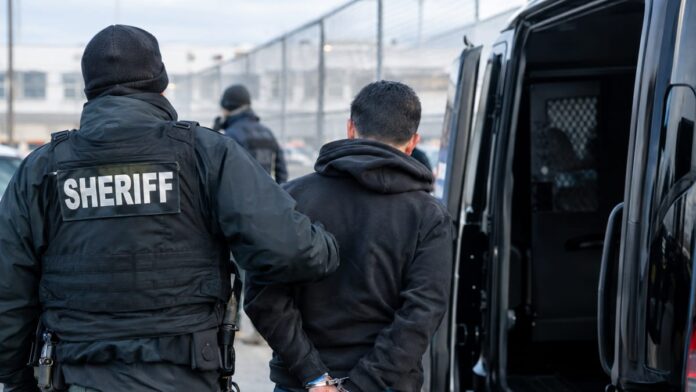
The Loudoun County Sheriff’s Office is ending its 287(g) jail agreement with U.S. Immigration and Customs Enforcement, after a federal appeals court let Virginia’s new limits on local cooperation with ICE take effect. Gov. Abigail Spanberger signed the law, SB 783, this year.
The sheriff’s office said it “is aware of the U.S. Court of Appeals decision to uphold Virginia’s restrictions on 287g agreements, and will abide by this decision.” The office told 7News it has turned over 330 people living in the country illegally to ICE so far this year.
Trust is public safety. No Virginian should fear that a call for help becomes a deportation – that's why I wrote SB783. The Fourth Circuit cleared the way on Monday.
Today, Loudoun County is ending its 287(g) agreement with ICE. @ACLUVA @LegalAidJustice https://t.co/FzJia1cVO5
— Senator Saddam Azlan Salim (@SalimForVA) November 25, 2026
What the ruling does
On Nov. 23, a Fourth Circuit panel vacated a preliminary injunction that had blocked Virginia’s 287(g) law. That law, Va. Code § 15.2-1726.1, required any agency with an agreement in effect on July 1, 2026, to obtain a modified agreement meeting the law’s conditions by Sept. 1, 2026. Any agreement not modified “shall be deemed void and unenforceable.”
Judge Toby Heytens, joined by Judge DeAndrea Gist Benjamin, wrote that the federal government cannot order state or local officials to enforce federal law, so Virginia may set the terms on which its own agencies cooperate with ICE. The panel also found the law does not violate the Contracts Clause.
The same panel kept in place a separate injunction against Virginia’s mask law, which would have barred ICE and other federal officers from covering their faces on duty. Judge Robert King agreed on the 287(g) law but dissented on the mask law.
Under its 287(g) Warrant Service Officer agreement, Loudoun deputies could hold jail inmates for up to 48 hours past their scheduled release so ICE could pick them up, according to Loudoun Now. The sheriff’s office said it will keep “honoring criminal warrants and immigration detainers concurrent with a person’s release” from the county jail, which means ICE must be there on release day.
Why it matters
Daily Beltway analysis: the 287(g) jail model lets local deputies hold people who are already in custody on criminal charges until ICE arrives. Without the extra 48 hours, a person with an immigration detainer can walk out if agents are not at the door when the sentence or bond ends. That shifts more of the work back to ICE field teams at a time when the administration is pushing to raise removals.
The ruling also cuts both ways. Virginia can pull its own officers out of federal enforcement, but it cannot order federal agents to unmask. It also means other Virginia sheriffs and jails holding 287(g) agreements must meet the law’s terms or see those agreements voided while the case continues.
The other side
The Justice Department argued the 287(g) law violated the Constitution’s Contracts Clause and the intergovernmental immunity doctrine, and Judge Payne had agreed. Judge King’s partial dissent faulted only the panel’s handling of the mask law; he agreed Virginia may limit 287(g) agreements. The federal government did not respond to a request for comment from Courthouse News.
Supporters welcomed the ruling. Virginia Attorney General Jay Jones called it “a significant victory for Virginia.” State Sen. Saddam Azlan Salim, who wrote the bill, said, “The federal government cannot conscript our local officers into its mass deportation machine.” Loudoun County Board Chair Phyllis Randall said she was “very pleased” with both the court’s decision and the sheriff’s.
What’s next
The Nov. 23 decision addressed only the preliminary injunctions. The federal lawsuit now returns to U.S. District Judge Robert Payne for further proceedings. Starting now, Loudoun hands over inmates with detainers only when ICE arrives on their release date.
Sources
- law.lis.virginia.gov
- wjla.com
- loudounnow.com
- courthousenews.com
- Original post: Senator Saddam Azlan Salim (@SalimForVA) on X, Nov 25, 2026
If an embedded post does not load, these links open the originals.