


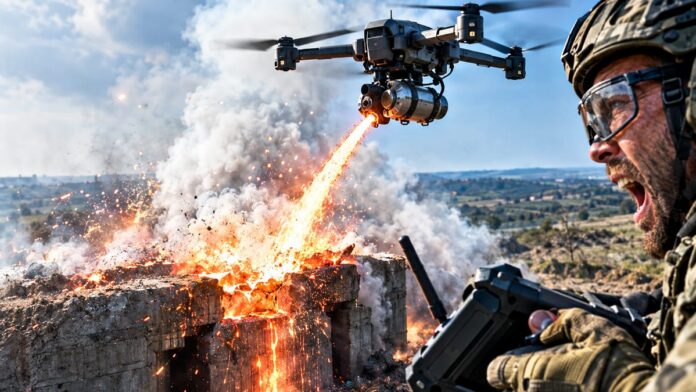
Dragon Drones Drop Molten Iron: Thermite Warfare Reshapes Modern Battlefield
Unmanned aerial systems equipped to release streams of molten iron are now delivering devastating incendiary strikes across active combat zones, marking a dramatic shift in how forces engage fortified positions and entrenched defenses. These specialized drones, often referred to as dragon drones, deploy thermite payloads that generate extreme heat upon contact, rapidly compromising structural integrity and overwhelming defensive positions that might otherwise resist conventional explosive munitions.
The technology allows operators to maintain standoff distance while sustaining prolonged high-temperature exposure on targeted structures, trenches, and fortifications. The molten material flows into cracks and weak points, exploiting vulnerabilities that traditional airstrikes or artillery cannot reach as effectively. In practice, this approach provides a tactical edge by combining precision with sustained destructive capacity, all delivered by small, agile platforms that evade many conventional air defense measures.
The insane landscape of modern drone warfare. Including "dragon drones" dropping molten iron (thermite) onto structures and trenches. pic.twitter.com/QRbeW2ffuE
— Donald Mitchell (@DonaldPMitchell) October 4, 2026
Footage circulating online shows these drones hovering above defensive positions, releasing cascades of white-hot thermite that pours onto buildings and trench networks. The visual impact is striking—flames and molten iron raining down from unmanned platforms, creating scenes that would have been unimaginable in conventional warfare just a decade ago. The footage underscores how rapidly drone capabilities have evolved beyond reconnaissance and surveillance into direct assault roles that reshape battlefield dynamics.
This development reflects the broader evolution of unmanned warfare, where innovation is driven by the demands of prolonged engagements and the need to reduce risk to personnel. Forces on multiple sides of recent conflicts have integrated drone fleets for reconnaissance, supply, and direct attack missions. The addition of thermite delivery systems adds another layer of complexity to defensive planning, as traditional hardened positions now face threats from above that can bypass conventional armor and fortifications through sheer thermal intensity.
The shift toward incendiary drone payloads highlights a critical gap in current defensive postures. Standard anti-aircraft systems are often calibrated for larger, faster aircraft or guided missiles, not for small, slow-moving drones that can loiter over a target and deliver sustained attacks. The result is a battlefield environment where visibility from above and rapid response times dictate much of the operational tempo, and where defenders must constantly adapt to new aerial threats that arrive with little warning.
As these technologies proliferate, the emphasis on counter-drone measures and advanced electronic warfare becomes essential for any military seeking to maintain an advantage. American defense priorities under the current administration continue to focus on strengthening domestic capabilities in unmanned systems to address emerging threats of this nature. The goal is to ensure that technological superiority remains a cornerstone of national security strategy, particularly as adversaries demonstrate increasing sophistication in their own drone programs.
The tactical implications extend beyond the immediate battlefield. Drone warfare driven by incendiary payloads forces a rethinking of how military forces protect critical infrastructure, supply lines, and personnel concentrations. Traditional fortifications that once provided reliable cover now face threats that can bypass physical barriers through thermal attack. This reality demands investment in new detection systems, electronic countermeasures, and rapid-response protocols designed to neutralize or disable hostile drones before they reach their targets.
The footage of molten iron cascading onto defensive positions serves as a stark reminder of how quickly the tools of war evolve. What begins as an experimental tactic in one theater of conflict can rapidly become standard operating procedure across multiple fronts. For American defense planners, the lesson is clear: innovation in unmanned systems is not optional. It is a strategic imperative that will define the balance of power in conflicts to come.
The dragon drone phenomenon also raises questions about the future of manned aviation and traditional ground combat. If small, inexpensive drones can deliver such devastating effects with minimal risk to the operator, the calculus for deploying expensive manned aircraft or committing large numbers of ground forces shifts dramatically. The cost-benefit analysis increasingly favors unmanned systems that can be produced in volume, operated remotely, and sacrificed without the political and moral costs of losing pilots or soldiers.
This is not science fiction. This is the current state of warfare, documented in real-time footage and battlefield reports. The age of dragon drones dropping molten iron onto defensive positions is here, and it demands a response that matches the scale and urgency of the threat.
Sources
- Original post: Donald Mitchell (@DonaldPMitchell) on X, Oct 4, 2026
- Related posts reviewed for this report:
- Ralfi PoELA777 🇺🇸 (@Ralfi_PoELA) on X, Oct 3, 2026
- Mrgunsngear (@Mrgunsngear) on X, Dec 21, 2024
- Global Strategy (@World_At_War_6) on X, Nov 29, 2025
Posts on X are shown as published by their authors; claims in them are attributed, not independently confirmed unless the article says so. If an embedded post does not load, these links open the originals.