


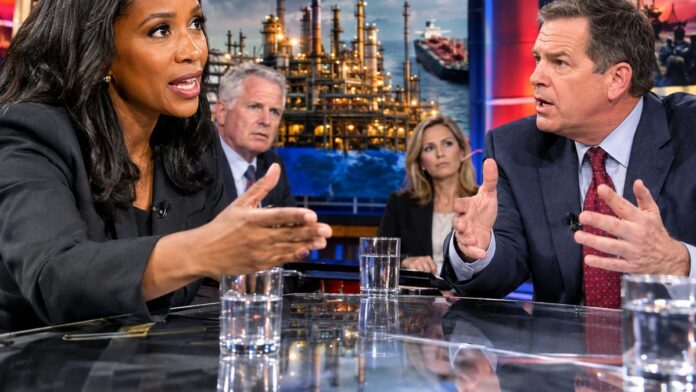
CNN Host Abby Phillip Denies Refinery Closures Drive Diesel Prices Despite Industry Evidence
CNN host Abby Phillip dismissed claims that reduced domestic refining capacity has contributed to rising diesel prices during a heated panel discussion with industry veteran Scott Jennings. Phillip stated directly that the closure of oil refineries is not driving the current price surge, emphasizing instead that global market forces are responsible.
The exchange exposed a fundamental divide over energy policy and the impact of domestic production decisions. Jennings, drawing on his oil and gas industry experience, challenged Phillip and her panel to support building a single new refinery to increase diesel supply. He noted that fuel must be refined before it can power trucks and vehicles, and that refining capacity in the United States has declined over the past two decades due to policy choices.
Abby Phillip: “What Scott says (the closure of domestic oil refineries is a major cause of price increases) is not true.”
Former oil and gas guy here: It is absolutely true!
“It’s a global commodity”
Former ship captain here: yes and there is a major shortage of oil tankers…
— John Ʌ Konrad V (@johnkonrad) October 2, 2026
Phillip pushed back, insisting that even if a new refinery were built immediately, it would not alter current prices because refining capacity today remains roughly the same as it was months earlier when diesel was cheaper. She emphasized that oil and gas function as global markets heavily influenced by events like the Russia-Ukraine conflict.
Jennings countered that the long-term reduction in domestic capacity has left the United States more vulnerable to international disruptions. He pointed out that global refining has been reduced in part because of the Russia-Ukraine war, with refineries taken offline, and stressed that a lack of domestic capacity means higher exposure to those shocks. Building more refineries in the United States, he argued, would provide a buffer allowing the country to respond better to global events rather than remaining fully at their mercy.
The CNN host maintained that the short-term price spike stems from global forces rather than any recent domestic refinery shutdowns. She highlighted how wars in Ukraine and elsewhere affect supply chains worldwide, making it unrealistic to isolate the United States from those pressures through new construction alone.
Jennings responded by noting the long-term pattern of reduced capacity, which Democrats have supported through regulatory opposition to new facilities. He insisted the current situation reflects years of that approach and asked repeatedly whether domestic refining capacity has declined over time.
Additional commentary from industry observers reinforced the point that shortages extend beyond refining. A former ship captain highlighted a major shortage of oil tankers as another constraint tightening global supply, compounding the effects of limited refining. These factors together illustrate why diesel prices have climbed sharply.
The exchange underscored the ongoing tension between short-term global explanations and longer-term domestic capacity issues. Proponents of expanded refining argue that increasing U.S. facilities would strengthen energy security and reduce reliance on volatile international markets.
Phillip’s dismissal of the refining capacity argument came despite Jennings presenting evidence that capacity has been reduced over decades. When asked directly if refining capacity today is the same as it was months ago when diesel was cheaper, Jennings noted it has been reduced over the last 20 years, a point Phillip did not dispute but instead characterized as irrelevant to the current price surge.
The debate highlights how policy decisions on domestic energy production continue to shape vulnerability to global market shocks. Democrats have historically opposed new refinery construction through environmental regulations and permitting obstacles. Those choices, according to industry veterans, have left the country with insufficient capacity to buffer against international disruptions.
Diesel prices have more than doubled in recent months, affecting trucking, agriculture, and transportation costs across the republic. The lack of domestic refining capacity means the United States cannot quickly ramp up production to offset global supply constraints.
Phillip’s position reflects a broader media narrative that attributes all energy price increases to external factors beyond domestic control. That framing allows policymakers to avoid accountability for decisions that limit domestic production and refining.
The exchange on CNN revealed the stakes of the energy debate. Either the United States builds the capacity to respond to global events, or it remains dependent on international markets and subject to the policy decisions of foreign governments.
Sources
- Original post: John Ʌ Konrad V (@johnkonrad) on X, Oct 1, 2026
- Related posts reviewed for this report:
- RedWave Press (@RedWavePress) on X, Oct 1, 2026
- RedWave Press (@RedWavePress) on X, Oct 1, 2026
- Steve Guest (@SteveGuest) on X, Oct 1, 2026
Posts on X are shown as published by their authors; claims in them are attributed, not independently confirmed unless the article says so. If an embedded post does not load, these links open the originals.