


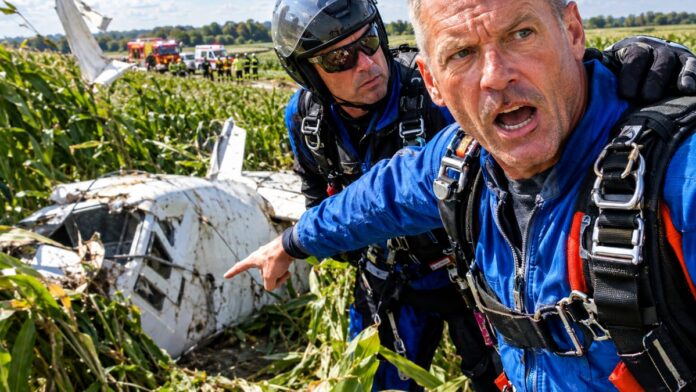
Skydivers Jump From Plane to Rescue Wisconsin Crash Victims in Cornfield
John Bechtel and two fellow skydivers from Skydive Milwaukee turned a routine jump into a life-saving rescue mission Sunday when they spotted a small plane going down near East Troy Municipal Airport and immediately jumped from their aircraft to reach the crash site before emergency responders.
Bechtel, who has spent three decades skydiving across Wisconsin, was preparing for a standard jump with two experienced colleagues when they noticed something wrong with a small aircraft in their vicinity. The plane banked sharply, then disappeared behind a tree line south of the airport.
ALERT: Skydivers spot a crashed small plane in a cornfield and jump out of their plane to go and help.
John Betchel and 2 other experienced skydivers were flying over Wisconsin when they spotted a plane going down in a cornfield just south of East Troy Municipal Airport.
The… pic.twitter.com/h69Ebd3ZyT
— E X X ➠A L E R T S (@ExxAlerts) September 29, 2026
The group watched and waited for the aircraft to reappear. It never did. Bechtel and the other jumpers looked at each other with the same unspoken question: did they just witness a plane crash?
Without hesitation, the skydivers asked their pilot to position the aircraft for an emergency jump over the suspected crash location. The pilot agreed immediately and dropped the jumpers directly over the cornfield where the plane had gone down.
The skydivers landed near the wreckage ahead of official first responders. One of the three jumpers is a former paramedic. He immediately began treating a passenger who had sustained a serious head injury in the crash.
Bechtel later described the narrow timing that made the rescue possible. Had the skydiving group departed five minutes earlier, they would not have seen the plane go down. Had they left fifteen minutes later, they would not have been able to reach the scene ahead of emergency medical services.
All four passengers aboard the crashed aircraft survived. Medical personnel expect all four to recover from their injuries.
Bechtel said the experience marked his first time jumping from a plane to respond to someone else’s emergency. He made clear he would repeat the decision without hesitation if it meant helping someone in need.
The incident highlights the value of individual action in moments of crisis. Three private citizens with specialized skills and training saw an emergency unfolding, made an immediate decision to intervene, and reached victims faster than official emergency services could respond.
The skydivers did not wait for permission or protocol. They assessed the situation, used the resources and skills they had available, and took direct action to assist people in distress.
One of the jumpers had medical training from years as a paramedic. That training proved critical in stabilizing the passenger with the head injury during the minutes before ambulances and fire crews arrived at the remote crash site in the cornfield.
The pilot of the skydiving aircraft cooperated fully with the emergency response, dropping jumpers at the skydivers’ request and then coordinating with air traffic control and ground responders.
Bechtel described the moment of decision as instinctive. The group did not deliberate or second-guess. They saw the plane vanish behind the trees, understood what had likely happened, and acted.
The crash occurred in a rural area south of East Troy Municipal Airport. The cornfield location made ground access difficult for emergency vehicles. The skydivers’ ability to reach the site by air gave them a critical time advantage in rendering aid.
The former paramedic among the jumpers assessed injuries, provided initial treatment, and relayed information to incoming emergency medical teams. His presence on scene before the arrival of ambulances likely improved outcomes for the injured passengers.
Bechtel emphasized that the timing of the skydiving group’s scheduled flight created the opportunity for the rescue. A few minutes’ difference in either direction and the skydivers would not have been in position to observe the crash or respond.
The incident demonstrates the effectiveness of decentralized emergency response when trained individuals take initiative. No government agency dispatched the skydivers. No central command coordinated their response. Three Americans with relevant skills saw a problem, recognized they could help, and acted immediately.
The four passengers who survived the crash owe their swift rescue to the skydivers’ willingness to abandon their planned activity and prioritize the emergency. Bechtel and his colleagues made a split-second decision that likely saved lives.
American traditions of self-reliance and mutual aid were on full display in a Wisconsin cornfield Sunday. When seconds mattered, private citizens with training stepped forward to fill the gap before official services arrived.