


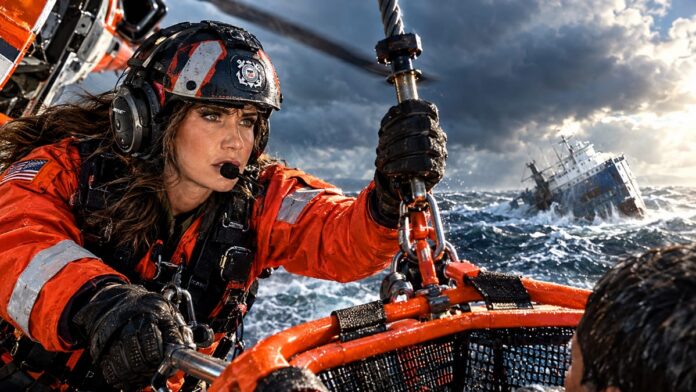
Coast Guard and Navy Pull 16 From Pacific; 11 Still Missing After Suspected Smuggling Boat Sinks
Coast Guard and Navy crews pulled 16 people from the Pacific Ocean about 140 miles west of Ensenada, Mexico, after a vessel taking on water began sinking in rough seas. Search and rescue operations continue for approximately 11 individuals still unaccounted for. The incident involved a suspected human smuggling operation that turned deadly when the overloaded boat encountered distress far from shore.
Initial reports indicated 27 people in the water. The Coast Guard confirmed 15 rescued in the first update, then revised the total to 16 as operations expanded. The remaining individuals are the subject of an ongoing search involving air and surface assets from both the Coast Guard and Navy.
UPDATE: 16 in total have been rescued. Search and rescue efforts are still ongoing.
Read more:https://t.co/ZCOzHSz9q1 https://t.co/v6OKU2BxyT
— USCG Southwest (@USCGSouthwest) October 16, 2026
The vessel’s distress occurred in remote Pacific waters, highlighting the severe risks smugglers create when they overload boats and push them into open ocean far beyond safe operating distance. Maritime smuggling attempts in this region routinely place lives in jeopardy as operators prioritize volume over safety, often using vessels unsuited for the conditions.
Rescue crews faced the challenge of locating and recovering individuals scattered across a wide search area in rough seas. The Coast Guard deployed helicopters and surface vessels, with Navy support adding reach and capacity to the effort. The operation underscores the life-threatening consequences when smuggling ventures encounter mechanical failure or weather that turns routine crossings into survival situations.
Smuggling operations off Baja California exploit dangerous routes to evade detection, frequently resulting in distress calls when boats break down or capsize. Federal maritime agencies respond to these incidents knowing that every delay increases the risk of additional fatalities. The Pacific’s cold water and distance from land compress the window for successful rescue.
The 16 survivors represent a fraction of those initially reported in the water. The gap between the number rescued and the number reported missing illustrates the scale of the crisis smugglers manufacture when they pack vessels beyond capacity and send them into open ocean. Each individual put aboard increases the likelihood of disaster when conditions deteriorate.
Ongoing search efforts focus on locating the remaining individuals, with crews covering a wide area based on drift calculations and last known positions. The challenges of operating this far offshore complicate every aspect of the mission, from fuel logistics to weather windows. The distance from Ensenada places the incident well beyond casual recreational boating zones, deep into waters where commercial and smuggling traffic overlap.
Incidents like this expose the real human cost of maritime smuggling. Smugglers collect payment and send boats into conditions that endanger everyone aboard, leaving rescue agencies to manage the aftermath. Federal authorities continue to confront these operations, which exploit desperate individuals and dangerous routes for profit. The focus remains on completing the search while documenting the circumstances that led to the vessel’s distress and the loss of life that appears inevitable.
Sources
- Original post: USCG Southwest (@USCGSouthwest) on X, Oct 16, 2026
- Related posts reviewed for this report:
- The San Diego Union-Tribune (@sdut) on X, Oct 16, 2026
- Christina Silk (@ChristinaSilk1) on X, Oct 16, 2026
- USCG Southwest (@USCGSouthwest) on X, Oct 16, 2026
Posts on X are shown as published by their authors; claims in them are attributed, not independently confirmed unless the article says so. If an embedded post does not load, these links open the originals.