

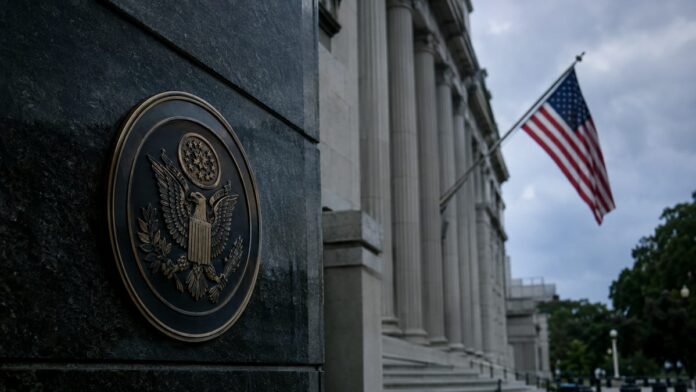
The Treasury Department on Monday sanctioned 22 companies and eight individuals tied to Iran’s shadow banking system, the network of exchange houses and overseas front companies Tehran uses to move money for its remaining foreign trade. The targets include the Iran Center for Exchange of Currency and Gold, which matches Iranian exporters earning foreign currency with importers who need it, for tens of billions of dollars in trade every year.
The action is the latest round of Operation Economic Outcast, the pressure campaign Treasury Secretary Scott Bessent announced on Aug. 24. “Iran’s economy is underwater, and its leaders are panicking,” Bessent said. “Iran’s shadow banking system is the last financial lifeline of a bankrupt regime. Treasury will continue dismantling these illicit networks until we have buried the head of the snake.”
Today, as part of Operation Economic Outcast, Treasury sanctioned over two dozen Iranian exchange houses, front companies, and key personnel in a sweeping effort to disrupt Iran’s global shadow banking networks. As Iran’s economy remains battered by punishing economic sanctions…
— Treasury Department (@USTreasury) November 23, 2026
What the sanctions do
The designations hit two Iran-based exchange houses, Mina Fashki and Partners Exchange Company and Mellat Exchange Company, along with their owners and officials. They also cover Rahbar Bazargani Nesim Baharan Qeshm Company, the so-called rahbar company that handles sanctions-evasion payments for Bank Sarmayeh, whose clients include major Iranian petrochemical companies.
Most of the overseas fronts are in Dubai, with others in Hong Kong and Türkiye. One Dubai firm, Recaz Star General Trading LLC, sent and received hundreds of payments totaling over $170 million from people associated with Sadaf Exchange. Another, OGA Global General Trading, handled millions of dollars in payments for the National Iranian Tanker Company, which runs Iran’s state-owned oil tanker fleet. A third, H N B Trading Co LLC, was designated under counterterrorism authority for helping an Iranian Armed Forces General Staff-linked company pay for the charter of the tanker SERENE I.
All property of the designated persons in the United States or controlled by U.S. persons is now blocked, and Americans are generally barred from dealing with them. Foreign banks that knowingly handle significant transactions for them risk losing access to U.S. correspondent accounts.
Iran’s economy is underwater, and its leaders are panicking. Iran’s shadow banking system is the last financial lifeline of a bankrupt regime. Treasury will continue dismantling these illicit networks until we have buried the head of the snake. https://t.co/iGrAeLuZEp
— Treasury Secretary Scott Bessent (@SecScottBessent) November 23, 2026
Why it matters
The same day, Treasury’s Financial Crimes Enforcement Network released an analysis identifying approximately $14.7 billion of financial activity from January 2025 to August 2026 potentially linked to Iranian shadow banking. Iran International reported that the review covered 4,983 transactions of at least $500,000 each and that recipients registered in the United Arab Emirates accounted for $7.6 billion, or 52%, of the total.
Daily Beltway analysis: With Iran’s visible crude exports near zero under the U.S. naval blockade, the money still moving through Dubai and Hong Kong fronts is one of the regime’s few remaining ways to pay for imports. Going after the Iran Center for Exchange targets the clearinghouse itself, not just the individual couriers, and the Central Bank of Iran also uses the center’s bonds to settle trade in Russian roubles and Chinese yuan without the dollar.
Tehran pushes back
Iran’s Foreign Ministry spokesman Esmaeil Baghaei said at a Monday briefing that “what the Americans have described as economic sanctions, an economic blockade and a naval blockade undoubtedly constitute an act of military aggression against Iran.” He said Iran is entitled under Article 51 of the U.N. Charter to use any means to defend itself, according to Al Jazeera, and that security in the Strait of Hormuz could be restored quickly if Washington lifts the blockade and sanctions.
What’s next
The designations took effect Monday. President Trump told Fox News he is inclined to order military strikes against Iran after the new year if the two countries fail to reach an agreement. Treasury said it will keep dismantling the networks, and the State Department’s Rewards for Justice program renewed an offer of up to $15 million for information on the Islamic Revolutionary Guard Corps’ finances.
Sources
- home.treasury.gov
- fincen.gov
- iranintl.com
- aljazeera.com
- aljazeera.com
- Original post: Treasury Department (@USTreasury) on X, Nov 23, 2026
If an embedded post does not load, these links open the originals.