


Batya Ungar-Sargon Confronts CNN With Hard Data on Media’s Race Obsession
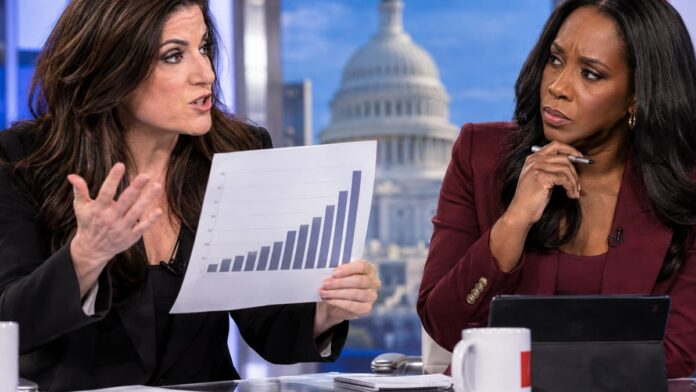
Commentator Batya Ungar-Sargon walked onto a CNN panel armed with numbers that exposed how the media manufactured a racial crisis out of thin air. During an exchange with host Abby Phillip, Ungar-Sargon detailed the explosive growth of racial terminology in major outlets starting around 2011, a shift that sociologists named the Great Awokening. The evidence is stark. In 2010, the words white supremacy appeared just 75 times combined in The Washington Post and The New York Times. By 2020, those same outlets published the term 700 times, while NPR alone hit 2,400 mentions. The word racism appeared 4,000 times in 2020. References to white and racial privilege surged 1,500 percent from 2013 to 2019 in the Times and the Post. Mentions of slavery itself skyrocketed as a percentage of total words used.
Ungar-Sargon explained that this surge coincided with a documented shift in white progressive opinion polling. Starting in 2011 and 2012, white liberals began taking more extreme positions on race than Black and Hispanic Americans. Sociologists traced the change to media framing rather than any worsening of conditions on the ground. Phillip pressed Ungar-Sargon on what harm could come from discussing slavery, white supremacy, and racism. Ungar-Sargon’s answer was direct. Liberals claim the coverage reflects reality, but the data proves otherwise. The obsession is artificial, driven by editorial choices that distort both history and moral perspective.
Abby Phillip: “[Trump] is focused on one thing that there is to much sl*very being mentioned in the United States of America, that’s very odd.”
Batya Ungar-Sargon: "In 2020, the words 'white supremacy' were mentioned 700 times in The Washington Post, in The New York Times, and… pic.twitter.com/uJxDXWnU3W
— John F Kennedy JR (@johnfkjuniorq) October 22, 2026
The transformation of American discourse stands in sharp contrast to the cultural environment that existed before the Obama years. Comedies such as Scary Movie, White Chicks, and Blazing Saddles thrived by poking fun at everyday absurdities without filtering every joke through a racial lens. Audiences laughed at human folly rather than scanning content for signs of oppression or privilege. That openness has been replaced by constant racial accounting. The same institutions that once covered broader stories now devote disproportionate space to identity-based framing, crowding out other national priorities.
President Trump has highlighted this imbalance, noting an overemphasis on slavery in American institutions that feels disconnected from the full sweep of the nation’s story. His approach aligns with the principle that all people are created equal by God, a unifying truth that once held the country together without requiring endless qualifiers about ancestry or grievance. The earlier cultural environment allowed satire and storytelling to cross lines freely because the underlying assumption was shared humanity rather than inherited division. Blazing Saddles used humor to expose prejudice through exaggeration, not through the solemn cataloging of historical sins that now dominates many exhibits and news segments.
The shift accelerated after 2010 and produced a climate where ordinary speech risks instant racial categorization. Ungar-Sargon’s data reveals an engineered narrative, not an organic reflection of events. The archives of major outlets confirm how quickly the language changed once the fixation took hold. The current emphasis owes more to editorial choices than to any proportional increase in the underlying issues themselves. Restoring balance means rejecting the notion that every topic must pass through the prism of race. The United States functioned with greater cohesion when media and culture treated citizens as individuals bound by common principles rather than perpetual representatives of group identity.
Trump’s focus cuts through the accumulated rhetoric by insisting on a return to that simpler, more accurate view of the republic’s past and present. The question is whether institutions will acknowledge the distortion their own coverage created or continue doubling down on a narrative the evidence no longer supports. Ungar-Sargon handed Phillip the numbers during a live exchange, and Phillip had no answer beyond asking what harm the coverage could cause. The harm is a fractured national conversation, endless grievance, and the erosion of the shared assumptions that once allowed Americans to move forward together. The media built the obsession. The data proves it. And now the country is paying the price.
Sources
- Original post: John F Kennedy JR (@johnfkjuniorq) on X
- Related posts reviewed for this report:
- Tironianae 🍊🍊 Z. – Ultra Verbum Vincet (@Tironianae) on X, Oct 18, 2026
- Texas MedBed Tech (@medBedsnews1) on X, Oct 18, 2026
- Stephen A Smith (@stephenasmith) on X, Oct 20, 2026
Posts on X are shown as published by their authors; claims in them are attributed, not independently confirmed unless the article says so. If an embedded post does not load, these links open the originals.