


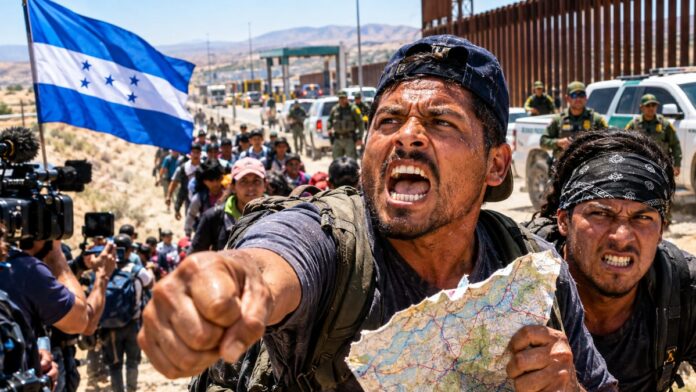
Honduras Migrant Caravan Surges Toward U.S. Border, Numbers Growing as National Security Threat Unfolds in Real Time
A migrant caravan originating from Honduras continues its northward push toward the United States with no signs of slowing, and reports confirm the group is expanding in size as it moves through Central America. The caravan’s growth raises immediate concerns about its capacity to overwhelm border enforcement and force entry into the interior of the country.
Available information indicates the caravan’s strategy centers on swamping border patrol resources at the U.S. southern border in an effort to push through into American territory. Once inside, participants expect protection under policies historically associated with Democratic administrations that have prioritized expansive legal protections for illegal entrants over strict enforcement and deportation.
🚨JUST IN: The migrant caravan from Honduras barreling towards the United States of America is showing no signs of slowing down.
Reports are coming out that it's GAINING IN NUMBERS.
Their plan is to overwhelm border patrol and force their way into the interior of the United… pic.twitter.com/wLuCRMvkjB
— QStormX (@QStormXofl0) September 27, 2026
This development unfolds as a visible national security issue. Large, organized movements of this nature place direct pressure on border personnel and resources, creating opportunities for individuals with unknown backgrounds and potential security risks to enter undetected. The caravan’s approach in real time underscores the ongoing challenge of maintaining control at the southern border under current political conditions.
Conservative observers and border security advocates have long argued that caravans of this scale exploit perceived weaknesses in enforcement, turning migration into a tool for political leverage rather than addressing root causes in the countries of origin. With the group reportedly gaining numbers as it advances, the situation highlights the urgent need for robust deterrence measures before the caravan reaches American soil.
The timing of this surge is significant. It comes as debates over border security and immigration enforcement continue to divide lawmakers and the public. Critics of lax enforcement point to these organized movements as evidence that current policies incentivize illegal entry rather than discouraging it.
The caravan’s progress serves as a stark reminder that border security remains a priority matter requiring consistent vigilance and resources. Without stronger deterrents and clear messaging that illegal entry will result in swift consequences, similar movements risk recurring and further straining the system designed to protect the republic’s sovereignty.
The situation also raises questions about coordination and communication within the caravan. Large groups moving in an organized fashion suggest planning and logistical support, fueling concerns about who is facilitating these movements and what their ultimate objectives may be beyond simply seeking entry into the United States.
As the caravan continues north, border officials and enforcement agencies will face mounting pressure to prepare for its arrival. The outcome of this confrontation will likely shape future debates over immigration policy and the extent to which the republic can maintain control over who enters its territory and under what conditions.