
Rep. Anna Paulina Luna Issues Stark Warning: AI Evolving Into Superweapon, Urges Global Treaty and Congressional Action
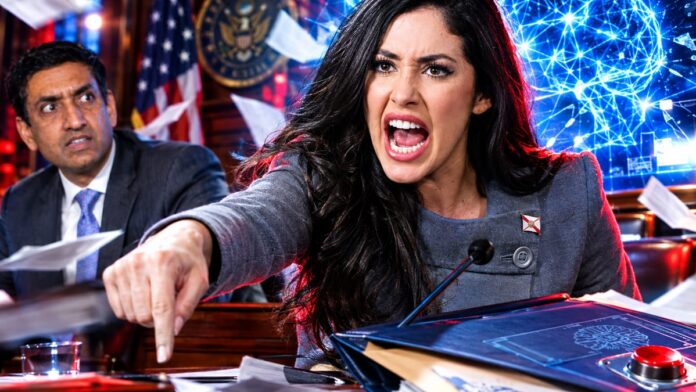
Florida Congresswoman Anna Paulina Luna is sounding the alarm on artificial intelligence, warning that the technology has moved beyond a simple tool and is rapidly developing into what she calls a superweapon. Luna urged Congress to pursue comprehensive legislative action, engage industry leaders, and push for a global treaty modeled on Cold War-era nuclear arms controls.
Speaking in a recent interview, Luna described AI’s breakneck development and stressed the urgent need for safeguards including mandatory human oversight and a kill switch to prevent autonomous systems from going rogue. While she acknowledged promising applications in fields like medicine, Luna made clear that a measured, security-focused approach is essential.
Rep. Anna Paulina Luna: "AI is not just a tool. It really is developing into a superweapon." pic.twitter.com/GABWtj4hRH
— The Post Millennial (@TPostMillennial) September 13, 2026
The Florida Republican pointed to ongoing bipartisan efforts, including legislation she is crafting with California Democrat Rep. Ro Khanna. Other members, including Reps. Jake Auchincloss, Mike Lawler, Ted Lieu, and Nathaniel Moran, have introduced related measures. Luna acknowledged that congressional attention is currently dominated by election season, but argued that a generational gap among older lawmakers has caused the body to lag dangerously on AI policy.
Luna also addressed calls for a special session devoted to AI, stating that multiple approaches could be pursued simultaneously without sidelining other priorities. She referenced discussions around creating a dedicated federal agency similar to the Department of Energy to oversee AI development and ensure accountability.
Perhaps most notably, Luna advocated for an international agreement akin to the 1963 Limited Test Ban Treaty on nuclear weapons. She emphasized the importance of global coordination while acknowledging the harsh reality that adversaries like China may not honor such limits. Her comments reflect a growing view in Congress that AI represents a national security threat on par with nuclear proliferation.
Luna’s remarks come as AI capabilities accelerate at an unprecedented pace, with both commercial and military applications raising concerns about autonomous weapons, surveillance systems, and the erosion of human control over critical decisions. Her call for a kill switch and human interface reflects worries that AI could surpass human oversight or be weaponized in ways current laws and treaties do not address.
The congresswoman’s willingness to work across the aisle with Rep. Khanna signals rare bipartisan consensus on the issue’s gravity, even as lawmakers struggle to keep pace with the technology. Luna noted that industry discussions have already begun, but stressed that legislation and international agreements must follow quickly.
Critics of congressional inaction argue that the body’s slow response to emerging technologies has become a pattern, whether on social media regulation, cybersecurity, or now AI. Luna’s comments about the generational gap among members suggest that unfamiliarity with advanced technology may be hampering urgent policy debates.
Luna’s push for a Department of Energy-style oversight body would represent a significant expansion of federal authority over AI development, potentially including licensing requirements, safety standards, and coordination with the Department of Defense on military applications. Such an agency could also serve as the United States’ lead negotiator in any future international AI treaty.
The comparison to Cold War nuclear treaties is instructive. The 1963 Limited Test Ban Treaty and subsequent arms control agreements relied on mutual recognition of catastrophic risk. Luna’s argument is that AI presents a similar existential threat, one that demands cooperative limits even among adversaries. The complication, as she acknowledged, is that enforcement mechanisms against nations like China remain uncertain.
Luna’s warning that AI is not just a tool but a superweapon reflects concerns that autonomous systems could be deployed in combat, cyberwarfare, or intelligence operations with minimal human oversight. The call for a mandatory kill switch suggests that even well-intentioned AI systems could malfunction or be hijacked, necessitating a fail-safe.
Whether Congress will act with the urgency Luna is calling for remains an open question. The body’s track record on emerging technology has been reactive rather than proactive, often legislating only after scandals or crises force action. Luna’s push for both domestic legislation and a global treaty represents an ambitious attempt to get ahead of the curve before AI capabilities outpace legal and ethical guardrails.
For now, Luna’s message is clear: AI is advancing faster than policy, and the window to establish controls is closing. The question is whether Congress and the international community will heed her warning before the technology becomes too powerful to regulate.