
Watch the full Daily Beltway report
Socialist Mayor Caught Funneling Tax Dollars to Secret Influencer Army
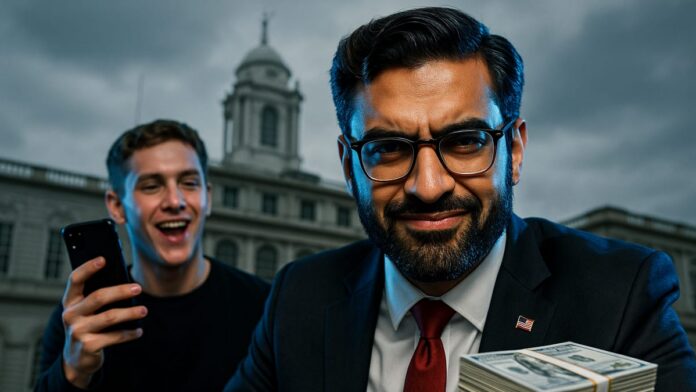
New York City Mayor Zohran Mamdani runs a secret Signal group chat connecting his administration to roughly 200 influencers who collect paychecks drawn straight from city tax dollars to promote his radical agenda.
The Columbia Journalism Review exposed the arrangement. City agency employees confirmed the going rate: five thousand to twenty thousand dollars per influencer campaign. The payments flow through marketing and advertising agencies that hold city contracts, creating a layer of separation between the mayor’s office and the cash landing in influencer bank accounts.
OUTRAGEOUS: Socialist New York City Mayor Zohran Mamdani has been EXPOSED for having a secret signal group chat with roughly 200 “influencers” paying them with NY tax dollars to promote his radical agenda.
Columbia Journalism Review: “New York City agency employees told us that… pic.twitter.com/I7OfNdriqW
— RedWave Press (@RedWavePress) September 3, 2026
The messages these paid promoters push range from bland civic calls like “Get out and vote” to explicit advocacy for “free healthcare.” Some influencers hold direct contracts with the city. They collect thousands of dollars for content that aligns with Mamdani’s policy priorities.
Bill Melugin reported the details on air. The scope is staggering. Two hundred influencers. Coordinated through a private messaging app. Funded by New Yorkers who already shoulder some of the nation’s highest tax burdens.
The setup operates through established marketing channels. That shields the direct flow of funds while still achieving the intended reach on social platforms. It also raises a glaring question: why are taxpayer dollars going to influencer campaigns instead of infrastructure, public safety, or basic city operations?
New York City agency employees described the payment structure to the Columbia Journalism Review. The fees go to influencers who receive contracts from third-party marketing firms. Those firms hold the city contracts. The arrangement keeps the mayor’s fingerprints off the transactions while still directing the message.
Critics see this as government-funded propaganda. When the content includes advocacy for expanded entitlements and partisan priorities, it crosses the line from public service announcements into taxpayer-funded political messaging.
No evidence has surfaced that these payments require standard competitive bidding. No public disclosure typical of other city expenditures. The use of a private messaging app for coordination further limits transparency. Residents funding this operation have no clear view of who participates or what directives they receive.
Some of the influencers hold direct city contracts. Others work through the third-party agencies. Either way, the money comes from the same place: New York taxpayers.
The Columbia Journalism Review report confirms the scale. Bill Melugin’s on-air reporting confirms the compensation levels. The facts are not in dispute. The mayor’s administration maintains a network of paid promoters who use social media reach to advance his agenda, and the public is footing the bill.
For a city struggling with crime, crumbling infrastructure, and an exodus of residents fleeing high taxes, the revelation that tax dollars are funding influencer campaigns is a slap in the face. New Yorkers work hard for their money. They pay some of the highest state and local taxes in the nation. The idea that those dollars are being redirected to pay Gen Z influencers to promote “free healthcare” while streets go unrepaired and subway systems deteriorate is indefensible.
The arrangement underscores a pattern. Progressive municipal leadership prioritizes ideological outreach over fiscal restraint. It uses public resources to shape public opinion rather than address core municipal needs.
The Signal group chat is not a trivial detail. It is a deliberate choice to operate in a space with limited oversight. Private messaging apps do not leave the same paper trail as official city email. They do not face the same public records requests. For an administration directing public funds to political messaging, that opacity is a feature, not a bug.
The going rate of five thousand to twenty thousand dollars per campaign is substantial. Multiply that by two hundred influencers and an unknown number of campaigns, and the total expenditure becomes significant. Yet no line item in the city budget clearly identifies this spending. No public debate preceded the decision to allocate funds this way.
New Yorkers deserve better. They deserve a city government that spends their money on services that improve their lives, not on social media campaigns designed to advance a political agenda. They deserve transparency in how public funds are spent and accountability when those funds are misused.
Mamdani’s influencer army is a case study in how progressive governance operates. It prioritizes narrative control over results. It uses taxpayer money to manufacture consent rather than earn it through competent administration. And it does so in the shadows, using private messaging apps and third-party contracts to avoid scrutiny.
The exposure of this scheme is a warning. When mayors can funnel public funds to political allies without competitive bidding, public disclosure, or meaningful oversight, the potential for abuse is limitless. What starts as influencer campaigns can escalate to far more significant diversions of public resources.
New Yorkers are watching. The question is whether they will demand accountability or accept this as the new normal.