
New York Lawmaker Pushes Bill to Lower Theft Penalties as Half of NYC Drugstores Close
A New York state legislator has advanced a proposal to reduce penalties for low-level theft, explicitly framing shoplifting and similar offenses as crimes of necessity driven by poverty. The measure would treat certain theft charges more leniently, similar to existing diversion programs for substance abuse and mental health cases, while deliberately avoiding felony classifications.
The timing could not be more striking. Nearly half of New York City’s drugstores have shut down since 2019. Two hundred seventy-four locations have closed their doors, representing a 49 percent collapse in neighborhood pharmacy access across the five boroughs. Residents who once walked a few blocks for prescriptions, over-the-counter medications, and basic household supplies now face longer trips and fewer options.
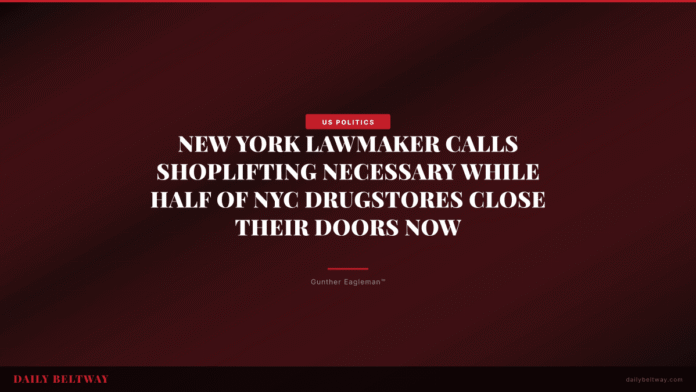
🚨 “CRIMES OF NECESSITY”
That’s what they’re calling theft now.
A New York lawmaker is pushing to reduce penalties for low-level theft because, according to her, some people just need to steal.
Meanwhile, nearly half the drugstores in New York City have closed since 2019.… pic.twitter.com/i2ukkI0HmO
— Gunther Eagleman™ (@GuntherEagleman) August 17, 2026
Proponents of the bill argue the policy addresses root causes rather than imposing jail time for minor offenses. The underlying assumption is that some individuals must steal to meet basic needs. That logic collapses under scrutiny. Many of the thefts driving store closures involve coordinated efforts by organized groups who resell stolen goods online and through secondary markets. Cases involving large quantities of toothpaste, cosmetics, beer, and other high-demand products point to commercial-scale operations, not isolated acts of personal hardship.
The retail landscape tells the real story. Stores that served dense urban neighborhoods for decades have disappeared at an accelerating pace. The closures leave behind pharmacy deserts where elderly residents, families with young children, and people managing chronic conditions struggle to access medications and basic health supplies. The costs fall hardest on the very communities these policies claim to protect.
Critics note that first-time offenders already avoid jail under current statutes in most cases. The notion that reducing penalties will somehow contain the problem ignores clear patterns in crime data. Small-scale theft frequently precedes larger incidents. Organized networks exploit lenient enforcement, moving goods through resale channels rather than consuming them out of immediate need.
The bill’s supporters describe it as compassionate policy, yet the evidence from New York City’s commercial districts suggests the opposite outcome. Sustained erosion of safety and availability for law-abiding residents and businesses alike. Stores close. Jobs disappear. Neighborhoods lose essential services.
This approach reflects a recurring view that excuses lawbreaking by reclassifying it as a social symptom. The drugstore closures represent a direct test of that theory. The results are visible on empty storefronts across the city. Policies that treat theft as an understandable response to economic pressure have coincided with this retail retreat, as businesses weigh the expense of repeated losses against continued operation.
The broader implications extend beyond New York. Similar measures have advanced in other blue-state legislatures, including California, where lawmakers are considering comparable reductions in theft penalties. The pattern is consistent: frame crime as a matter of necessity, reduce consequences, and watch as businesses exit and communities lose access to everyday goods and services.
The drugstore closures in New York City offer a clear lesson. When theft is excused and penalties are reduced, the people harmed are not wealthy elites insulated by private security and concierge services. The people harmed are working families, seniors on fixed incomes, and residents of neighborhoods already underserved by retail. They pay higher prices where stores remain, travel farther for basic needs, and live with the consequences of policies that prioritize offenders over victims.
Nearly half the drugstores in New York City have closed since 2019. That is not a coincidence. That is the result of policy choices that excuse theft, reduce accountability, and drive businesses out of communities that need them most. The bill advancing in Albany will accelerate that decline. The question is how many more stores must close before lawmakers acknowledge the damage they have caused.