


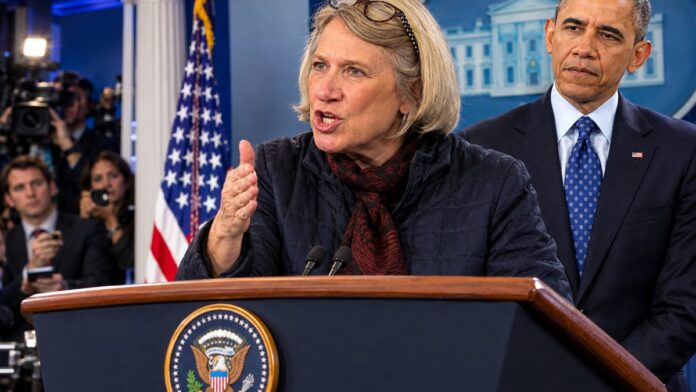
Obama Administration Targeted Fox News, Called Network ‘Wing Of Republican Party’
The Obama administration waged an open campaign in 2009 to delegitimize Fox News as a legitimate press organization, labeling the network a partisan operation and attempting to bar its reporters from official pool coverage.
President Barack Obama addressed the matter directly during a press exchange that year, stating the administration would treat media differently depending on whether it operated as a talk radio format or a news outlet. He added the distinction was not something he was losing sleep over.
Supercut of the 2009 Obama administration War against Fox News when they repeatedly delegitimized the network by categorizing them as 'not a news organization'. Including Obama admin attempting to exclude Fox News reporters from pool coverage of one of their officials:
Obama:… pic.twitter.com/G7sOBysdaK— Eric Abbenante (@EricAbbenante) September 19, 2026
Communications director Anita Dunn escalated the rhetoric in her own remarks, describing Fox News as more a wing of the Republican Party than a news network. She insisted the network was widely viewed as part of the Republican apparatus and urged observers not to pretend Fox functioned like CNN as a news organization.
The public statements coincided with concrete action by the Treasury Department, which moved to exclude Fox News from pool coverage of interviews with one of its key officials. The attempted ban triggered immediate objections from other outlets and was reversed under pressure, but it marked a rare effort by a sitting administration to restrict a specific network’s access to routine government events.
Fox News senior vice president Michael Clemente responded to the administration’s characterization at the time, noting that an increasing number of viewers relied on Fox News for both news and opinion. He pointed out that average news consumers could distinguish between hard reporting and editorial content, comparing the network’s structure to a newspaper’s A section and editorial page. Clemente urged critics to address the stories and facts rather than attack the messenger, adding that such tactics had never worked over time.
Dunn defended the administration’s posture by citing what she described as independent analyses comparing Fox News to CNN, ABC, and NBC. She pointed to differences in story selection and on-screen graphics as evidence of a fundamentally different approach, asserting the network functioned as a vehicle for Republican talking points and opposition research rather than standard journalism.
The episode drew comparisons to historical friction between presidents and the press, yet the 2009 effort stood apart for its explicit attempt to redefine one outlet’s status rather than simply criticize its coverage. President Franklin Roosevelt once tried to present a New York Daily News correspondent with an Iron Cross from Nazi Germany over war reporting he found offensive. President John Kennedy attempted to have New York Times reporter David Halberstam pulled from Vietnam. Vice President Spiro Agnew delivered legendary assaults on network press, coining phrases that became cultural touchstones.
What distinguished the Obama administration’s approach was the public framing of Fox News as something other than a news organization entitled to equal treatment. The language suggested the network occupied a category separate from traditional media, justifying differential access and engagement.
The Treasury Department’s exclusion attempt brought defenses from journalists at competing outlets who saw the move as crossing a line. The reversal came after those outlets made clear they would not participate in pool arrangements that excluded a credentialed network based on the administration’s editorial preferences.
Obama’s own remarks indicated a calculated posture toward the network. He acknowledged he would appear on Fox News programming because he engaged with ideological opponents, but framed such appearances as debates with the opposition rather than standard press interviews. Dunn reinforced that framing, stating the president understood he was not going on Fox as a news network but rather to confront adversaries.
The administration’s public campaign against Fox News in 2009 reflected a broader pattern of tension with outlets whose coverage highlighted stories the White House preferred to avoid. The network’s success in attracting viewers skeptical of other media organizations made it a persistent irritant to officials accustomed to more cooperative relationships with legacy outlets.
The contrast with later press access disputes remains instructive. The 2009 episode involved senior officials openly declaring one network illegitimate and attempting to exclude it from pool coverage, yet drew limited sustained scrutiny from media watchdogs at the time. The precedent set during that period resurfaced in subsequent administrations as the question of differential treatment for critical outlets became a recurring fault line in press-government relations.
Fox News maintained its White House credentials throughout the Obama presidency, and the administration ultimately backed away from the most aggressive postures after the Treasury incident. The episode nonetheless established that an administration willing to frame a major news organization as partisan opposition could test boundaries with limited immediate consequence, provided other outlets did not mount a unified defense of press access principles.
The 2009 campaign against Fox News remains a clear case study in how administrations navigate the tension between managing press criticism and maintaining the appearance of respecting press freedom.