
Harris Admits Democrats Relied on Loose Voter Rolls for Fifty Years
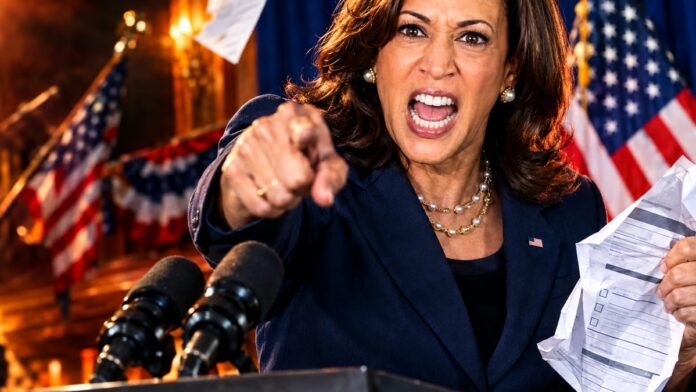
Former Vice President Kamala Harris has described routine Republican efforts to clean state voter rolls as a form of cheating that strips Democrats of advantages they have counted on for half a century. In a video statement that has drawn sharp attention from election-integrity advocates, Harris openly acknowledged that her party has relied on specific mechanisms—now being dismantled—to maintain electoral strength.
Harris stated that Republicans have tried to, and in some cases successfully taken, tools that Democrats relied on for the last fifty years. She called purging voter rolls cheating, alongside redistricting and changes to polling locations. The direct reference to fifty years of reliance on these tools has been interpreted by critics as an inadvertent admission that inflated or inaccurate voter rolls have provided a partisan advantage.
🚨 JUST IN: Kamala Harris just said Republicans removing ineligible voters and illegals from the voter rolls is "CHEATING" and removing Democrats' "tools"
"We RELIED on [these tools] for the last 50 years! […] They are CHEATING by purging voter rolls […] They try to take our…
— Eric Daugherty (@EricLDaugh) September 23, 2026
She framed the issue as Republicans stripping away mechanisms Democrats have used for decades, noting that provisions of the Voting Rights Act are no longer available in the same way. Harris urged supporters to register and verify their status on the rolls to counter what she portrayed as deliberate removal of names. At the same time, she insisted Democrats remain creative in their response and will continue organizing despite the obstacles.
The comments come as states under Republican leadership continue routine maintenance of voter rolls to comply with federal law. These cleanups remove individuals who are deceased, have moved out of state, or lack eligibility to vote. Federal law already requires states to maintain accurate lists, and repeated court cases have upheld purges when proper procedures are followed. The National Voter Registration Act mandates regular updates to ensure rolls reflect only eligible, living residents.
Harris specifically called out changing polling locations and purging voter rolls as tactics designed to suppress turnout. She encouraged voters to check their registration status to ensure they have not been removed. Her language suggested that removing ineligible names is itself a barrier rather than basic election administration.
Election-integrity advocates have seized on Harris’s characterization of voter-roll maintenance as cheating. They argue that accurate rolls are essential to public confidence and that removing ineligible entries is not suppression but compliance with the law. The former vice president’s direct reference to reliance on these tools for fifty years has been cited as evidence that one party has benefited from loose registration practices.
With President Trump in office, congressional Republicans have advanced legislation aimed at strengthening election safeguards. The SAVE America Act has been cited as a priority to establish clearer national standards for voter-roll accuracy and to deter fraud. Proponents argue that secure elections rest on verifiable eligibility, and that cleaning rolls is a transparent, legally required process.
Critics of Harris’s remarks contend that labeling routine eligibility checks as cheating reveals a preference for maintaining inflated rolls rather than ensuring only qualified citizens participate. They point out that every state has a legal obligation to verify voter eligibility and that the process is designed with safeguards to prevent improper removals. Multiple audits have found that voter rolls in some jurisdictions contain names of people who have died, moved, or were never eligible in the first place.
The former vice president’s comments are seen by some as an attempt to shift focus from the integrity of the process to partisan complaints about lost advantages. Republicans have argued that opposition to cleaning voter rolls amounts to opposition to election security itself. They note that mass deportations of illegal immigrants would further reduce opportunities for noncitizens to appear on rolls, linking border enforcement directly to election integrity.
As the 2026 midterms approach, the debate over voter-roll maintenance is expected to intensify. Supporters of stricter enforcement maintain that secure elections demand verifiable eligibility at every step. Opponents continue to frame the same steps as barriers designed to disenfranchise voters. Harris’s characterization of these efforts as cheating underscores the divide between those who view accurate rolls as essential and those who treat them as obstacles to preferred outcomes.
The video has circulated widely on social media, with many pointing to the fifty-year timeframe Harris cited as particularly revealing. If Democrats have relied on certain tools for five decades, critics argue, the question becomes what those tools were and why their removal is treated as existential. The answer, they say, lies in the difference between eligibility enforcement and permissive administration that leaves the door open to fraud.
Republicans have responded by doubling down on their commitment to clean rolls and secure elections. They argue that every illegal vote cancels out a legal one, and that protecting the integrity of the ballot box is a matter of preserving the republic. Harris’s remarks are likely to fuel further calls for the SAVE America Act and other reforms designed to close gaps in the system.
The admission that Democrats have counted on specific tools for fifty years—and now consider their removal to be cheating—has handed election-integrity advocates a rhetorical gift. Whether Harris intended the statement as a confession or simply a rallying cry for her base, the language she chose has become a flashpoint in the larger battle over how America conducts its elections.