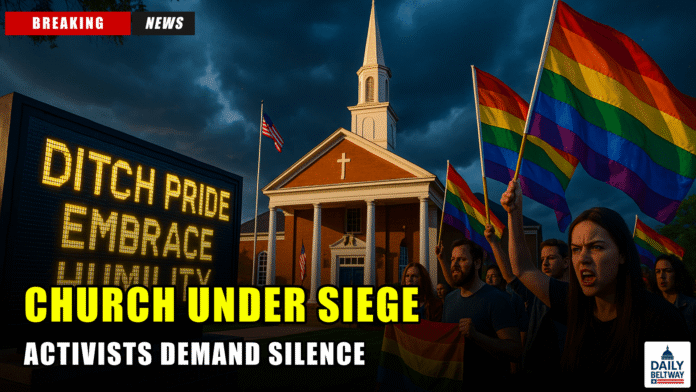

A church in Palatine, Illinois is under attack from LGBTQ activists demanding the removal of messages posted on its digital sign.
The dispute centers on simple religious statements displayed during June, including messages like “We love you enough to tell you the truth” and “Ditch pride and embrace humility.”
Protesters carrying rainbow flags gathered outside the church property, insisting the messages be taken down and calling the content offensive.
The LGBTQ+ community say they find messages being displayed on a churches digital screen offensive in Chicago and demand they be removed
“The pastor says the messages he posts on the sign are appropriate to the season, like Christmas or Easter, and June happens to be Pride… pic.twitter.com/yUTGAzLdLK
— Wall Street Apes (@WallStreetApes) June 28, 2026
The pastor explained the sign messages correspond to the season, similar to how the church posts Christmas messages in December or Easter messages in spring. June happens to be Pride Month, and the church’s messaging reflects its religious beliefs about humility and truth.
Church leaders view the digital sign as straightforward religious expression on private property. The activists see it differently. They want the messages censored and removed entirely.
The same group of demonstrators has also pressed Palatine city officials to fly the Pride flag at City Hall. Those requests have been repeatedly denied under existing city ordinances governing flag displays at public buildings.
No changes to those municipal rules have been reported. The city has maintained its policy despite activist pressure.
The confrontation illustrates how far demands from LGBTQ organizations have expanded. What began as calls for legal recognition of same-sex marriage has morphed into efforts to control religious speech on church property.
Private religious institutions are now expected to conform their messaging to activist preferences or face organized protest.
The church has not removed or altered its seasonal messages. The digital sign continues to display the same statements that triggered the demonstrations.
No government action has been taken against the church. The dispute remains a standoff between a faith community exercising constitutional rights and activists who believe those rights should not apply when the message offends them.
Palatine is a suburb northwest of Chicago with a population around 68,000. The community has traditionally reflected middle-class Midwestern values.
The episode reveals a growing pattern across American suburbs. Traditional religious institutions that once operated without controversy now find themselves targets when they articulate beliefs that conflict with progressive ideology.
The messages in question are not hateful or violent. They express Christian teaching about humility and truth. Yet even these mild religious statements are now deemed unacceptable by activists who demand removal.
No violence has been reported at the protests. The demonstrations have remained peaceful, consisting primarily of flag-waving and demands directed at church leadership.
The church sign sits on church property. It is not a public billboard. The messages are chosen by the pastor and reflect the congregation’s religious convictions.
First Amendment protections for religious speech remain robust in American law. Private religious institutions have clear constitutional rights to express their beliefs on their own property without government interference.
What activists are demanding here is not a legal remedy but social pressure. The goal is to make religious expression so costly in terms of public confrontation that churches self-censor rather than face demonstrations.
The Palatine church has refused that bargain. Its leadership continues to post messages consistent with Christian teaching regardless of activist opposition.
City officials have similarly held firm on the Pride flag issue, declining to violate existing ordinances despite repeated requests.
The cultural battlefield has shifted from courtrooms to church lawns. Activists who secured legal victories on marriage policy now seek to control religious messaging itself.
For churches in communities like Palatine, the choice is stark: maintain religious integrity and face protest, or capitulate to demands for silence.
This church chose the former. The digital sign still displays messages about truth and humility. The rainbow flags still wave outside in opposition.
Neither side appears ready to back down. The confrontation continues as a test case for how much religious expression will be tolerated in American public spaces when it conflicts with activist ideology.