

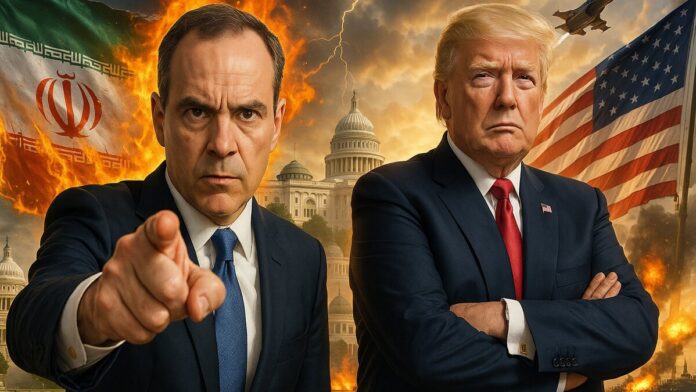
Scott Bessent delivered the most devastating assessment of Iran’s collapsing regime in decades during a high-stakes NBC News interview that has electrified conservative circles nationwide. President Trump’s Treasury Secretary nominee compared Iran’s leadership to Hitler’s bunker in its final days, declaring the command structure “dead” and reducing recent Iranian missile launches to desperate “lone wolf activities” by a terror state in its death throes.
Bessent’s withering analysis comes as American precision strikes have crippled Iran’s military infrastructure and economic lifelines. The surgical bombing campaign targeting Kharg Island, Iran’s premier oil export terminal responsible for over 90 percent of crude shipments, has slashed the regime’s revenue streams while exposing the hollow nature of Tehran’s threats.
🚨 BOOM! SCOTT BESSENT NAILS IRAN
“This is Hitler's bunker. Hitler is dead, Himmler is dead, Göring is dead. Most of what you're seeing are lone wolf activities. The midrange ICBM that was shot off, these two missiles yesterday, that's out of desperation!”pic.twitter.com/FNlqG2YKJb
— Eric Daugherty (@EricLDaugh) March 22, 2026
“This is Hitler’s bunker,” Bessent stated with unflinching clarity. “Hitler is dead, Himmler is dead, Göring is dead. Most of what you’re seeing are lone wolf activities. The midrange ICBM that was shot off, these two missiles yesterday, that’s out of desperation.”
The historical parallel strikes at the heart of Iran’s predicament. Like Nazi Germany’s final weeks in April 1945, when Allied forces closed in on Berlin, Iran’s ayatollahs now huddle in fortified bunkers while their command network disintegrates. The Islamic Revolutionary Guard Corps, once the vanguard of regional aggression, scrambles amid communication blackouts and leadership vacuums.
When pressed by NBC about potential troop deployments to secure the Strait of Hormuz, Bessent invoked Trump’s signature strategic ambiguity. “He’s not going to give away what we’re going to do. He’s leaving all options on the table,” the nominee responded, projecting the kind of strength that kept adversaries guessing during Trump’s first term.
This measured unpredictability represents a masterclass in deterrence psychology. Unlike the Biden administration’s predictable telegraphing of military moves, Trump’s approach keeps enemies off balance while reassuring allies of American resolve. The strategy has already paid dividends across multiple theaters.
The backdrop to Bessent’s remarks reveals the scope of American success. Precision airstrikes have targeted key installations across Iran’s military and energy infrastructure. Satellite imagery confirms massive disruptions at Kharg Island, with fires raging across terminals, pipelines severed, and supertankers idled in the Persian Gulf.
Iran’s retaliation efforts underscore Bessent’s “desperation” assessment. The regime launched two feeble mid-range missiles in what amounted to isolated potshots from rogue elements rather than coordinated military action. These weren’t strategic strikes from unified command but chaotic responses from a shattered hierarchy.
The economic devastation extends far beyond military targets. Kharg Island’s disruption has slashed Iran’s oil exports by an estimated 70 percent overnight, depriving the regime of billions in revenue that previously funded terrorist proxies across the Middle East. Prior sanctions had already driven inflation to 40 percent and the rial to historic lows.
Black market oil smuggling, Tehran’s financial lifeline during Biden’s lax enforcement period, faces naval interdictions from the reinvigorated Fifth Fleet. Gold prices in Tehran have surged 50 percent as panicked elites hoard assets, signaling the regime’s approaching fiscal collapse.
Conservatives have long warned that weakness invites aggression, and the Biden-Harris interregnum proved this axiom. Emboldened by the Afghanistan withdrawal debacle and billions in sanction relief, Iran ramped up uranium enrichment to 84 percent purity while orchestrating proxy attacks that killed American servicemembers.
Houthi drones menaced Red Sea shipping under Biden’s watch, costing global trade over $1 trillion annually. Hezbollah barrages tested Israeli defenses while Iran thumbed its nose at diplomatic pressure through fresh ICBM tests. Biden’s response consisted of ineffective pinprick strikes and toothless UN resolutions.
Trump’s return has restored the deterrence doctrine that kept Iran contained during 2017-2021. Operation Gulf Thunder launched over 150 Tomahawk cruise missiles and F-35 sorties that eviscerated IRGC missile installations from Bandar Abbas to Bushehr. Iran’s missile arsenal, once numbering 3,000 warheads capable of striking Europe, has been effectively halved.
The strikes mirror Trump’s January 2020 elimination of Qasem Soleimani, which decapitated Iran’s expeditionary force and prompted Tehran’s failed ballistic missile barrage on U.S. bases. Iran blinked then under pressure; it’s crumbling now under sustained assault.
Bessent brings Wall Street acumen to this geopolitical triumph. As CEO of Key Square Group, he navigated market volatility during global crises, skills he’ll now wield against Iran’s shadow banking empire. His Treasury confirmation hearings promise to showcase the financial warfare dimension of maximum pressure.
The strategic calculus extends beyond Iran to regional stability. Securing the Strait of Hormuz protects the 21-mile chokepoint through which nearly 20 percent of global oil flows. This safeguards allies like Saudi Arabia and the UAE while rewarding American energy producers in the Permian Basin.
Oil price increases following the strikes benefit domestic producers who thrived under Trump’s deregulation policies. The energy independence achieved through American shale production provides strategic flexibility that Europe’s green energy fantasies cannot match.
Escalation risks remain minimal given Iran’s degraded capabilities. The regime’s aging air force cannot challenge fifth-generation American fighters. Hezbollah’s rocket arsenal faces Israeli preemption honed through recent Gaza operations. The Houthis, after losing half their fleet to carrier strikes, now seek negotiated settlements.
Internally, regime fissures continue widening. Protests that toppled governments across the region now target Khamenei directly, with women burning hijabs and workers striking refineries. The disbanded morality police cannot contain popular rage fueled by economic collapse and infrastructure failures.
International leaders applaud Trump’s decisive action. Netanyahu calls the coordination “historic” while Saudi Crown Prince Mohammed bin Salman pledges deeper intelligence sharing. Even Putin, entangled in Ukraine, views Iran’s weakness with strategic concern.
Left-wing critics cry “imperialism,” but facts contradict their narrative. Civilian casualties remain minimal thanks to precision targeting, unlike Biden’s collateral-heavy Afghan withdrawal. The operations cost fractions of Biden’s $100 billion Ukraine expenditure while achieving clear strategic objectives.
Bessent’s “Hitler’s bunker” assessment captures a regime devouring itself like Nazi holdouts in their final days. The ayatollahs’ 45-year reign of terror, from Beirut barracks bombings to 9/11 facilitation, approaches its twilight as American strength reasserts global leadership.
This represents the Trump doctrine vindicated through strength-based diplomacy. No more midnight cash deliveries or JCPOA illusions. Iran huddles in bunkers while America leads from position of unquestioned strength, exactly as conservative foreign policy demanded.