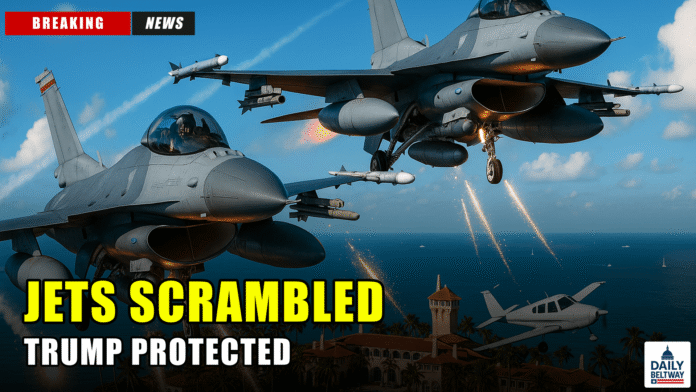

NORAD F-16s Fire Flares After Private Plane Breaches Trump Airspace at Mar-a-Lago
F-16 fighter jets scrambled by NORAD fired warning flares at a private aircraft that violated restricted airspace near President Trump at Mar-a-Lago Sunday afternoon. The dramatic intercept occurred around 1:15 p.m. as Trump prepared to return to Washington.
The incident unfolded when an unidentified private plane breached the Temporary Flight Restriction zone protecting Trump’s Palm Beach estate. NORAD fighters responded within minutes, deploying flares to force the aircraft out of restricted airspace.
NORAD scrambled F-16 fighter jets after a private aircraft violated restricted airspace near President Trump in Florida.
— Breaking911 (@Breaking911) March 29, 2026
Secret Service confirmed no threat existed to Trump or Air Force One, which sat ready at Palm Beach International Airport. The violating aircraft quickly complied and exited the restricted zone without further incident.
The breach triggered swift action from America’s air defense network. F-16s likely launched from Tyndall Air Force Base or Florida Air National Guard units, racing to intercept the intruder with precision timing that showcases military readiness under Trump’s leadership.
Flare deployment represents a graduated response in aerial intercepts. These pyrotechnic devices create brilliant bursts visible from the ground, serving as unmistakable warnings to cease violations immediately. The message was received and the pilot departed quickly.
Earlier social media buzz about drones near Trump’s plane proved false. Secret Service attributed those reports to miscommunication about this private aircraft incident. No unmanned vehicles were involved despite viral speculation online.
Mar-a-Lago operates under the tightest security protocols in the nation. TFR zones create invisible barriers around presidential locations, backed by radar surveillance and rapid response capabilities that make violations costly mistakes.
The weekend incident occurred as Trump hosted GOP lawmakers and business leaders at his Winter White House. These high-stakes gatherings require maximum security, with NORAD maintaining 24/7 alert postures to defend against any aerial threats.
FAA regulations mandate severe penalties for TFR violations. Pilots face felony charges, aircraft seizure, and millions in fines for breaching presidential airspace. Most comply immediately when confronted by military interceptors.
This breach highlights the robust security apparatus protecting Trump’s presidency. Investments in modernized air defense, increased Secret Service manpower, and integrated threat detection systems ensure comprehensive protection against all aerial incursions.
The private pilot’s identity remains under FAA investigation. No arrests were announced, but enforcement action is expected given the serious nature of violating presidential airspace during active security operations.
Trump’s return flight to Washington proceeded as scheduled at 6 p.m., with Air Force One departing under full security protocols. The incident demonstrated that America’s air defense remains uncompromising in protecting the Commander-in-Chief.
Conservatives praised the swift response as evidence of military readiness under Trump’s leadership. The flare deployment sent a clear message: presidential security is non-negotiable and violations will be met with immediate, overwhelming force.
The intercept reinforces Trump’s commitment to ironclad security measures. Unlike previous administrations where lapses invited criticism, this incident was resolved professionally within minutes, proving the effectiveness of enhanced protection protocols.
As investigations continue, one fact remains clear: America’s skies above Trump are defended by the world’s most capable military. Any future violations will meet the same rapid, decisive response that protected our republic’s leader today.