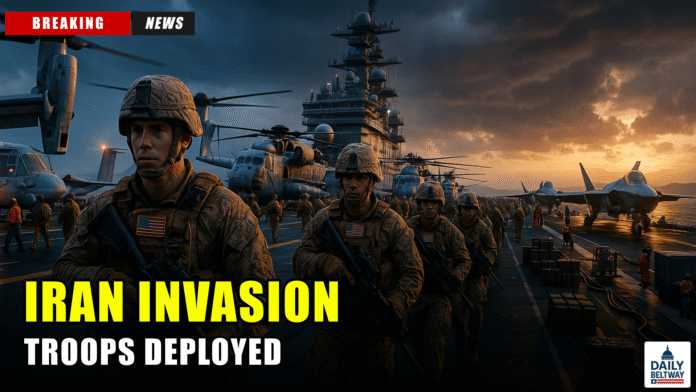

Thousands of U.S. Forces Deploy to Middle East as Iran Ground Operation Looms
Thousands of additional American forces have arrived in the Middle East as reports emerge of preparations for a potential limited ground operation into Iran. The massive military buildup signals the Trump administration’s commitment to decisive action against the Iranian regime’s nuclear ambitions and terror sponsorship.
The USS Tripoli, carrying 3,500 troops including 2,500 Marines, docked in the Central Command area over the weekend. This amphibious assault ship brings America’s total Middle East presence to over 50,000 personnel, up from 30,000 before the current crisis began four weeks ago.
🚨 TREY YNIGST REPORTS: “Thousands of additional U.S. forces arrive in the Middle East amid reports of a possible limited ground operation into Iran.”
— Breaking911 (@Breaking911) March 29, 2026
Defense officials confirmed the deployment as part of broader contingency planning for operations targeting Iranian oil facilities and uranium stockpiles. If ordered, the mission would involve both elite special forces and conventional units in a week-long incursion designed to neutralize immediate threats without overextending American commitments.
The development follows coordinated U.S.-Israeli airstrikes that hammered Iran’s military infrastructure over the weekend. Israeli officials detailed precision strikes against the entire chain of nuclear production in Iran, from manufacturing capabilities to centrifuges and enrichment facilities.
While the attacks delayed Iran’s nuclear program, officials acknowledged they did not completely destroy the regime’s atomic ambitions. This partial success underscores the need for potential ground operations to finish what airpower began.
Tragedy struck early Saturday when 22-year-old IDF soldier Moshe Katz from Connecticut was eliminated by a Hezbollah rocket in southern Lebanon. The American-born serviceman’s sacrifice highlights Iran’s proxy network’s continued aggression despite weeks of military pressure.
Hezbollah has launched over 1,200 rockets in recent weeks, transforming southern Lebanon into a launchpad for Iranian-sponsored terror. The group’s precision-guided missiles, smuggled past ineffective UN resolutions, pose ongoing threats to Israeli civilians and American interests.
President Trump’s second-term approach marks a stark departure from previous administrations’ hesitant responses. Unlike the Obama era’s failed nuclear deal or Biden’s timid diplomacy, Trump’s team has activated decisive military options against Iranian provocations.
The current escalation began when Hamas launched a multi-front assault on Israel, synchronized with Hezbollah barrages and Houthi attacks in the Red Sea. Iran itself fired over 300 ballistic missiles in retaliatory volleys, most intercepted by Israeli and American defense systems.
IAEA inspectors report Iran now possesses 60% enriched uranium stockpiles sufficient for multiple nuclear warheads. This nuclear sprint represents an existential red line for Trump’s national security team, led by experienced hawks who view appeasement as catastrophic.
The USS Tripoli’s Marine contingent brings MV-22 Ospreys, CH-53K King Stallions, and F-35B Lightning II aircraft specifically designed for rapid amphibious assaults. Combined with carrier strike groups from the Abraham Lincoln and Gerald R. Ford, American forces now possess overwhelming conventional superiority in the region.
Special operations units have reportedly conducted covert reconnaissance along Iran’s southern coast, mapping critical targets including Kharg Island oil terminals and Bushehr nuclear facilities. Prepositioned stocks of advanced cruise missiles and precision munitions await potential deployment orders.
Conservatives have long warned that weakness invites aggression. The 2019 Abqaiq attacks on Saudi oil infrastructure demonstrated Iran’s willingness to strike economic targets when facing insufficient deterrence. Today’s military buildup signals that era of Iranian impunity has ended.
Brent crude prices have spiked to $110 per barrel amid regional instability. A targeted operation to secure Iranian oil facilities could stabilize global energy markets while denying Tehran billions in terror funding. American energy independence through fracking and LNG exports provides crucial leverage in this calculation.
Allied coordination remains exemplary under Trump’s leadership. Israeli Prime Minister Netanyahu praised weekend strikes as part of escalating operational tempo. British and French forces provide intelligence support while Gulf allies offer expanded basing rights.
The potential ground operation blueprint emphasizes surgical precision over prolonged occupation. Special Forces would secure beachheads for Marine Expeditionary Units, targeting specific facilities before rapid withdrawal within 168 hours. This approach minimizes American exposure while maximizing strategic impact.
Historical precedents support limited action. Reagan’s 1986 Libya strikes effectively deterred Gaddafi’s terrorism without triggering broader war. Trump’s model follows this successful pattern: decisive force projection followed by swift disengagement.
Iran’s regime faces growing internal pressure from protest movements that have challenged clerical rule since 2022. External military pressure could amplify domestic dissent, potentially triggering regime collapse without American ground forces becoming bogged down in nation-building.
For American families, the stakes remain personal. Moshe Katz’s sacrifice in Connecticut exemplifies the human cost of Iranian aggression. Thousands more service members now deploy to prevent nuclear terrorism while defending democratic allies.
China and Russia posture diplomatically but lack capacity for meaningful intervention. Beijing’s oil purchases from Iran pale beside American energy exports, while Moscow’s military support proves insufficient against overwhelming NATO superiority demonstrated in Ukraine.
As military preparations intensify, President Trump faces crucial decisions about authorizing ground operations. Intelligence assessments suggest Iranian nuclear facilities could resume full production within months without decisive intervention.
The choice confronting America is stark: accept Iranian nuclear weapons or act decisively while conventional superiority remains decisive. Trump’s peace through strength doctrine demands action when diplomacy fails and deterrence collapses.
History will judge whether America seized this moment to prevent nuclear terrorism or allowed weakness to invite catastrophe. The thousands of troops now deploying represent America’s commitment to defending civilization against radical extremism.