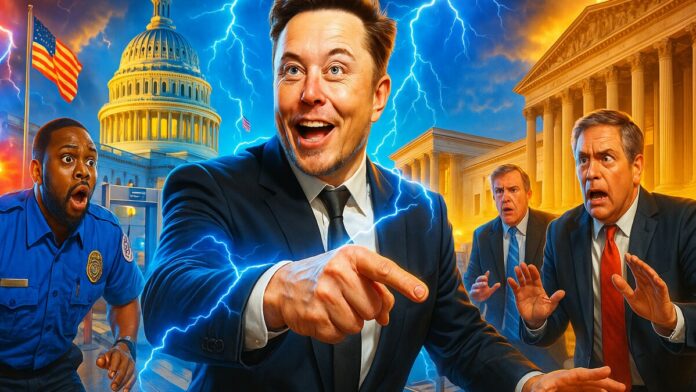

Elon Musk’s bold offer to personally pay TSA agent salaries has exposed a fundamental clash between private sector innovation and government bureaucracy, revealing both the appeal of bypassing federal inefficiency and the legal barriers that prevent such solutions.
The world’s richest man floated the idea of directly compensating Transportation Security Administration workers, potentially circumventing congressional funding disputes that often leave essential workers unpaid during government shutdowns. But Fox News analysis reveals the proposal faces significant constitutional hurdles that highlight deeper problems with how government operates.
The Anti-Deficiency Act specifically prohibits federal agencies from accepting gifts or payments that exceed their authorized funding levels. This 19th-century law was designed to prevent private interests from essentially buying government services, but it now stands as a roadblock to innovative solutions that could keep critical operations running when politicians fail to do their jobs.
“The funding does need to come from the government,” Fox News reported, acknowledging both admiration for Musk’s initiative and recognition of legal constraints. The tension illustrates a broader question facing American governance: should outdated laws prevent private citizens from stepping in when government systems break down?
Musk’s suggestion isn’t merely about paying salaries. It represents a direct challenge to the assumption that government monopolizes essential services. If a private citizen can afford to maintain TSA operations during funding lapses, it raises uncomfortable questions about why taxpayers must depend entirely on congressional competence for basic security functions.
The proposal gains particular relevance given recent airport chaos. Delta Airlines reported that eight of their top ten booking days occurred in March alone, with five happening during the first week of operations. This surge in travel demand means TSA disruptions could affect millions of Americans who depend on functional airport security.
Constitutional law experts would likely point to separation of powers concerns. Allowing private citizens to directly fund government operations could create uncomfortable dependencies and blur the lines between public service and private influence. The Founders designed government funding mechanisms to ensure accountability to voters, not wealthy benefactors.
Yet Musk’s offer exposes government’s fundamental inefficiency problem. Private sector leaders routinely solve complex logistical challenges without shutting down operations over budget disputes. The idea that essential services must halt because politicians cannot agree on spending priorities seems absurd to many Americans who manage their own finances responsibly.
The Department of Government Efficiency discussions, which Musk has championed, directly relate to this TSA funding question. If government operations were truly efficient, funding disputes wouldn’t threaten basic services. The fact that airport security hangs in the balance during budget negotiations suggests deeper structural problems.
Previous government shutdowns have demonstrated the arbitrary nature of which services continue and which halt. Essential personnel often work without pay while non-essential bureaucrats stay home with full compensation restored retroactively. This system serves political theater more than public interest.
Musk’s wealth allows him to propose solutions that smaller entrepreneurs cannot. His offer essentially calls Congress’s bluff on shutdown theater. If private citizens can maintain government operations, what exactly justifies the massive federal bureaucracy and its constant funding crises?
The legal prohibition against private funding reveals government’s jealous protection of its monopoly status. Rather than welcoming efficiency improvements, the system actively prevents alternatives that might expose its own inadequacies. This defensive posture suggests officials fear comparison with private sector competence.
Travel industry data supports the urgency of maintaining TSA operations. With demand reaching unprecedented levels, any disruption multiplies across the entire aviation ecosystem. Airlines, hotels, and tourism businesses all suffer when security theater becomes actual dysfunction.
The constitutional questions surrounding Musk’s proposal deserve serious examination rather than reflexive dismissal. If private citizens can more reliably fund essential services than government appropriations processes, perhaps the problem lies with those processes rather than innovative solutions.
This episode crystallizes the choice facing American governance: embrace private sector solutions that actually work, or maintain bureaucratic monopolies that regularly fail citizens. Musk’s offer forces that conversation whether politicians want it or not.
The TSA funding debate ultimately reflects broader tensions between government control and practical results. When billionaires can solve problems faster than Congress can pass budgets, traditional assumptions about public versus private roles deserve serious reconsideration.