
HOUSE STRIPS OMAR’S MILLION-DOLLAR EARMARK TO FAKE CLINIC THAT WAS ACTUALLY A RESTAURANT
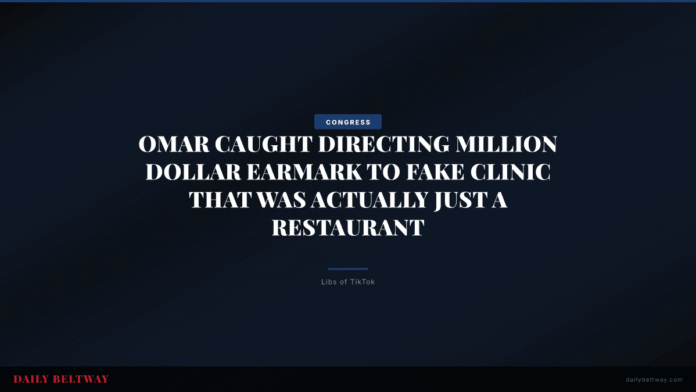
The House voted to strip a one million dollar earmark from a spending bill after it was discovered the money was headed to a supposed substance abuse clinic that turned out to be a restaurant.
Representative Ilhan Omar of Minnesota requested the earmark for what she described as a treatment facility. The reality was far different.
Ilhan Omar requested a $1 million earmark for a “substance abuse clinic” that was actually a restaurant run by Somalis pic.twitter.com/SFDcgwjsIH
— Libs of TikTok (@libsoftiktok) April 14, 2026
According to IRS paperwork and public records, the so-called clinic was housed inside a restaurant. Three individuals ran the operation, all sharing the same residential address.
The arrangement set off immediate red flags for anyone paying attention to how federal money flows through Minnesota. This is not the first time fraud has been uncovered in Omar’s district.
The daycare center scandal that rocked the state involved similar patterns of abuse. Federal funds designated for legitimate childcare services were systematically stolen through fake organizations and phantom operations.
Now Congress is seeing earmarks being used the same way. A member requests funding for a noble-sounding purpose, the paperwork gets filed, and the money flows to entities that exist on paper but not in reality.
In this case, someone caught the fraud before the million dollars actually transferred. The House stripped the earmark from the spending bill entirely.
But the fact that it made it that far into the legislative process raises serious questions about oversight and accountability.
How does a restaurant masquerading as a medical treatment facility make it through the earmark approval process? Who verified that the organization was legitimate before rubber-stamping a million-dollar request?
The three operators sharing one home address should have been an instant disqualifier. That is not how legitimate nonprofits or healthcare providers operate.
Omar has built a career representing a district plagued by fraud schemes targeting federal programs. Whether she is directly complicit or simply negligent, the pattern is undeniable.
Taxpayer money keeps flowing to Minnesota for programs that do not exist or do not serve their stated purpose. Someone keeps requesting that money, and someone keeps approving it.
The earmark system was supposed to give local representatives the ability to direct federal funds to legitimate community needs. Instead, it has become a vehicle for corruption.
When a restaurant can nearly receive a million dollars earmarked for drug treatment, the system is broken. When the member making the request faces no immediate consequences, the system has no teeth.
This earmark was caught and removed. How many others have made it through without scrutiny?
The broader Minnesota fraud epidemic continues to grow. Daycare scams, pandemic relief fraud, and now congressional earmarks all point to a region where federal oversight has completely collapsed.
Omar sits at the center of a district where fraud is rampant and accountability is nonexistent. She either knows what is happening and enables it, or she is so detached from her own earmark requests that she does not know where the money is actually going.
Neither explanation is acceptable for a sitting member of Congress.
The House did the right thing stripping this earmark. But one caught fraud does not erase the systemic problem.
As long as members can request funding without verification, as long as organizations can misrepresent their purpose without penalty, and as long as oversight remains a joke, this will keep happening.
American taxpayers deserve to know their money is going to real programs that serve real people. Not restaurants pretending to be clinics. Not fraudsters sharing an apartment while collecting federal grants.
The removal of this earmark is a small win. The war against fraud in Minnesota is far from over.